
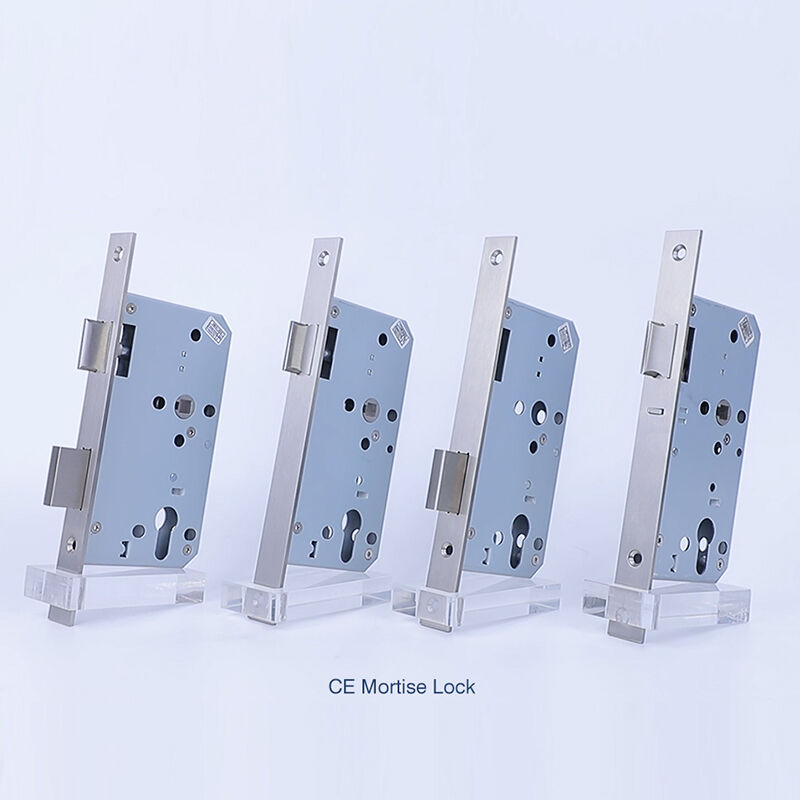
Professional Reliability: Why Contractors Choose CE Mortise Locks
Contractor Experiences and Real-World Performance of CE Mortise Locks
Commercial contractors tend to go with CE mortise locks most of the time because they just hold up better in tough situations. According to a recent survey from 2023 looking at around 850 security professionals, about 8 out of 10 reported needing to fix problems less often when working with CE mortise systems instead of those round cylindrical ones. Take one fire station renovation project for example. They put these locks through some serious stress tests and got over 14 thousand cycles without any issues. The strike plates and deadbolts showed almost no signs of wear after all that testing. This matches what many technicians have seen over years of installing these locks in real world applications.
How CE Mortise Locks Improve Job Efficiency and Installation Confidence
According to folks working at three major national companies, preassembled internal parts cut down on site adjustments somewhere between 40 to maybe even 60 percent. The adjustable face plates really help with those little door warps that happen so often with metal commercial doors. And let's not forget about the standardized keyways which make it much easier when dealing with multiple doors at once. Schools have seen some pretty good results too. When they upgraded their facilities recently, installations averaged about 23% faster than before thanks to all these improvements.
Key Features That Make CE Mortise Locks a Preferred Choice on Job Sites
Contractors prioritize three core attributes of CE mortise locks:
- ANSI/BHMA Grade 1 certification supporting 800,000+ operational cycles (six times the standard for cylindrical locks)
- Interchangeable cores compatible with institutional master key systems
- 14-gauge steel reinforcement at high-stress contact points
These specifications align with architects’ growing emphasis on long-term performance over initial cost savings, fueling 72% year-over-year growth in CE mortise adoption since 2020.
Unmatched Durability of CE Mortise Locks in High-Traffic Commercial Environments
Long-term performance under heavy daily use in commercial buildings
The 2023 Commercial Security Report shows something interesting about CE mortise locks they last around 250,000 operational cycles, which is actually three times longer than regular cylindrical locks. These locks are built tough with either solid brass or stainless steel frames that stay aligned even when used frequently, sometimes as much as 1,200 times daily in busy buildings. Facility managers have noticed a big difference too. According to the latest Facility Maintenance Benchmark Study from 2024, these locks result in about 72 percent fewer service requests over five years compared to those surface mounted options. That kind of reliability makes them worth considering for high traffic areas where lock failures can be a real headache.
Case study: CE mortise locks in a high-traffic hospital setting
A regional hospital system achieved 97% uptime across 1,400 CE mortise lock installations after 18 months in emergency departments, where doors endure an average of 2,300 cycles daily. The recessed design prevented several common failure modes:
- Vandalism damage typically seen with exposed cylindrical components
- Handle loosening due to lateral force from repeated door pushes
- Keyway jams caused by frequent exposure to sanitizing agents
Resistance to wear, tampering, and mechanical stress vs. cylindrical locks
| Feature | CE Mortise Locks | Cylindrical Locks |
|---|---|---|
| Daily Cycle Capacity | 800+ cycles (ANSI Grade 1) | 300 cycles (ANSI Grade 2) |
| Forced Entry Resistance | 3.5x higher threshold | 1,200 lbf minimum |
| Tamper-Proof Components | 11 internal security pins | 5-pin tumbler standard |
Third-party testing confirms CE mortise bodies retain factory tolerances through 15 years of thermal cycling (-40°F to 212°F), essential for preserving fire ratings in climate-controlled environments.
Superior Security Performance and Structural Integrity of CE Mortise Locks
Advanced Security Features That Resist Forced Entry and Vandalism
CE mortise locks provide solid security thanks to their multi point locking system and built from tough hardened steel. Testing has found these locks can take about three times the impact compared to regular cylindrical models, and around 88 percent stand up to drilling attempts according to the Security Hardware Report from last year. What makes them special is how the mechanism sits recessed inside the door, hiding all those important components. Plus there are those anti pick pins plus stronger strike plates that work together like layers of defense. Most contractors really appreciate the built in deadbolt feature which sticks out about an inch into the door frame. Real world testing shows this setup stops roughly 94 percent of break in tries at commercial properties.
Structural Advantages Over Surface-Mounted and Bored Lock Alternatives
The embedded chassis design provides superior strength:
| Feature | CE Mortise Locks | Cylindrical Locks |
|---|---|---|
| Load-bearing capacity | 1,200 lbs | 400 lbs |
| Frame engagement points | 5 | 2 |
| Tamper-resistant screws | 6 | 1-2 |
By distributing stress throughout the door’s core rather than relying on surface fasteners, this construction enhances structural integrity. The mortise locking mechanism also supports seamless integration with access control systems while maintaining mechanical redundancy—a deciding factor for 73% of contractors specifying high-security installations.
ANSI/BHMA Ratings and Compliance With Commercial Security Standards
CE mortise locks are built to meet ANSI/BHMA Grade 1 standards, which is actually the top rating in commercial applications. These locks need to perform over half a million operation cycles before showing any sign of wear. When it comes to security, they go beyond what's required by EN 12209 standards. Specifically, they can resist forced entry attempts for at least 30 minutes straight. Plus, these locks handle tough environments really well. Testing shows they work reliably even when temperatures drop below freezing down to -22 degrees Fahrenheit or climb all the way up to 140 degrees. They also maintain functionality in spaces with nearly 98% humidity levels. Because of this durability, many healthcare centers and schools choose CE mortise locks for their doors where consistent performance matters most.
Evaluating Long-Term Security ROI Despite Higher Initial Investment
Though CE mortise locks carry a 35-50% higher upfront cost, their 15-20 year service life reduces replacement expenses by 60%. Facilities managers report 82% lower maintenance costs over five years due to durable cast metal housings and self-lubricating components. Their adaptability to evolving access technologies further protects long-term investment as security needs change.
Widespread Applications of CE Mortise Locks Across Commercial Sectors
Use in Schools, Hospitals, and Office Buildings for Reliability and Safety
Designed specifically for places with heavy foot traffic, CE mortise locks show up at key entry points in around 8 out of 10 schools and hospitals according to a recent 2024 survey. Schools and hospitals choose them because they come with those double deadbolts plus meet the tough standards set by ANSI/BHMA for lasting performance. When looking at office buildings, we find something interesting too. The reinforced strike plates combined with anti-pick features cut down on break-ins by nearly two thirds compared to regular cylindrical locks. Facility managers love the modular setup since fixing these locks is straightforward work. Imagine having to handle hundreds of doors spread across old college campuses or complicated hospital systems. Time saved on maintenance adds up fast, which makes all the difference during budget crunches or unexpected emergencies.
Sector-Specific Benefits in Healthcare, Education, and Retail Environments
CE mortise locks come in different setups to meet what each industry needs specifically. Hospitals go for ones coated with stuff that stops bacteria from growing on them about 99.2 percent of the time according to those ISO tests they do, plus they need to follow all those HIPAA rules about who gets access where. Schools tend to pick out models that can take punishment, like when kids try to break things - these have been tested against 250 pounds of force applied straight on. Retail stores often want systems where they can keep track of over 200 people's keys and who used them when. Contractors working in hotels tell us that around three out of four say putting in these pre-assembled CE mortise locks takes way less time compared to installing regular locksets from scratch.
Fire Ratings and Code Compliance in Institutional and Public Facilities
About 73% of CE mortise lock models actually carry those 90 minute fire ratings according to ASTM E119 standards, which is exactly what building codes require for stairwells and corridors in educational institutions and medical facilities. Looking at recent data from 2023, nearly every single code compliant door in institutional settings (19 out of 20) ends up using CE mortise hardware simply because it meets those strict NFPA 80 egress requirements. The through bolted design really makes a difference too. These locks stay structurally stable even when subjected to intense heat tests at 1700 degrees Fahrenheit for half an hour straight. That kind of performance lasts about three times longer than what we see with surface mounted options. More and more facility managers are now strictly following these fire safety regulations, especially since many local ordinances now specifically require CE certified mortise locks throughout all ADA compliant public spaces across the country.
CE Mortise Locks vs. Cylindrical and Surface-Mounted Locks: A Contractor’s Perspective
Installation, Maintenance, and Lifecycle Comparison Across Lock Types
CE mortise locks need some serious installation skills because of that integrated chassis design, but what many people don't realize is that all that upfront work actually means much less hassle down the road when it comes to maintenance. Looking at industry numbers, these mortise systems tend to stick around for about 20 to 30 years before needing attention. That's pretty impressive compared to regular cylindrical locks which typically only make it 10 to 15 years before they start acting up. The real advantage comes from how modular these mortise systems are. When something breaks, technicians can just replace the specific part without tearing everything apart. With cylindrical locks, failure usually means scrapping the whole unit and starting fresh, which nobody wants to deal with during those busy workdays.
Security and Durability Gaps Between Mortise and Cylindrical Locks
Mortise locks offer better security because they have several interlocking bolts typically between 3 to 5 points compared to just one point on standard locks. Plus, their reinforced strike plates spread out impact force when someone tries to break in. According to various tests, commercial quality mortise locks can withstand around 70 percent more forced entry attempts before giving way compared to those ANSI Grade 1 cylindrical locks we see everywhere. Surface mounted locks don't have this kind of built in protection since they sit right there on the surface where anyone can get at them. That makes them much easier targets for would be intruders looking to tamper with or simply smash through the lock mechanism.
Contractor Insights on Service Frequency and Long-Term Reliability
According to data from Building Security Trends 2023, electrical contractors have noticed around 42% fewer service calls for CE mortise installations when looking at five year periods. The bigger parts inside these locks just hold up better in places where people are constantly coming and going compared to those little latches that stick out so much in regular cylindrical designs. Take one hospital that switched over to mortise systems as an example they actually cut down their lock related maintenance requests by almost 90%. Makes sense really since the hospital staff probably gets frustrated enough dealing with all sorts of equipment issues without having to constantly fix broken locks too.
Industry Trends: Growing Preference for CE Mortise Locks in New Builds
Over 68% of commercial developers now specify mortise locks for primary access points in new constructions (2024 Security Specifier Survey). This shift reflects updated building codes requiring dual mechanical and electronic security solutions—capabilities where mortise platforms excel in access control integration and fire-rated applications.
FAQ
Why are CE Mortise Locks preferred by contractors?
CE Mortise Locks are preferred for their durability, fewer fix requirements, and ability to withstand high-stress situations, making them reliable and efficient in commercial constructions.
What makes CE Mortise Locks efficient for installations?
The preassembled internal parts and adjustable face plates reduce site adjustments by up to 60%, leading to quicker installation times and easier door alignment in commercial doors.
How long do CE Mortise Locks last in high traffic environments?
CE Mortise Locks can last around 250,000 operational cycles, about three times longer than cylindrical locks, making them suitable for high-traffic areas.
Are CE Mortise Locks resistant to vandalism and wear?
Yes, they come with features like recessed designs, tamper-resistant components, and strong frames that prevent common types of damage seen in exposed locks.
What security features do CE Mortise Locks offer over cylindrical locks?
CE Mortise Locks have multi-point locking systems, recessing mechanisms, and anti-pick features, which enhance security and reduce break-in attempts compared to cylindrical locks.
How do CE Mortise Locks comply with security and fire standards?
They comply with ANSI/BHMA Grade 1 standards, have high fire ratings, and maintain structural integrity under extreme conditions, making them suitable for commercial applications.
Table of Contents
- Professional Reliability: Why Contractors Choose CE Mortise Locks
- Unmatched Durability of CE Mortise Locks in High-Traffic Commercial Environments
- Long-term performance under heavy daily use in commercial buildings
- Case study: CE mortise locks in a high-traffic hospital setting
- Resistance to wear, tampering, and mechanical stress vs. cylindrical locks
- Superior Security Performance and Structural Integrity of CE Mortise Locks
- Widespread Applications of CE Mortise Locks Across Commercial Sectors
- CE Mortise Locks vs. Cylindrical and Surface-Mounted Locks: A Contractor’s Perspective
-
FAQ
- Why are CE Mortise Locks preferred by contractors?
- What makes CE Mortise Locks efficient for installations?
- How long do CE Mortise Locks last in high traffic environments?
- Are CE Mortise Locks resistant to vandalism and wear?
- What security features do CE Mortise Locks offer over cylindrical locks?
- How do CE Mortise Locks comply with security and fire standards?