
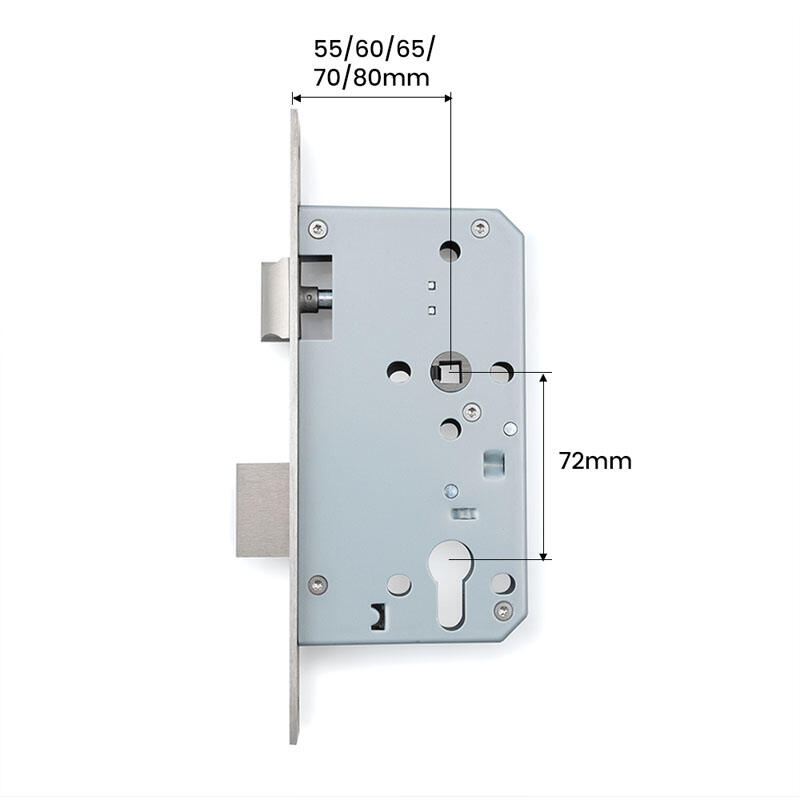
Understanding CE Mortise Locks and the BS EN 12209 Standard
What Is a CE Mortise Lock and Why It Matters for Compliance?
CE mortise locks, which stand for Conformité Européenne, represent high security locking systems that have passed strict EU tests for safety, health, and environmental impact. Building professionals need these locks when working on projects throughout Europe since they satisfy local regulations. The requirements often include things like lasting mechanical strength against wear and tear, ability to withstand fires, and proper emergency exit functions during evacuations. When manufacturers follow standards such as BS EN 12209, it means their products work well together regardless of country boundaries. This makes life easier for contractors dealing with multiple EU nations because paperwork gets processed faster without extra hurdles during inspections.
Overview of the BS EN 12209 Standard for Door Hardware
The BS EN 12209 standard defines performance criteria for locksets used in residential and commercial doors. As outlined in SDH Hardware's 2022 analysis, it uses an 11-digit classification code to assess three core attributes:
- Usage intensity: From 10,000 cycles (light residential) to 100,000+ (high-traffic commercial)
- Security performance: Resistance to forced entry, drilling, and manipulation for up to 5 minutes
- Environmental resilience: Corrosion resistance verified through 96-hour salt spray testing (ISO 9227)
This standardized evaluation enables specifiers to select hardware based on verified performance rather than subjective claims.
Decoding Classification Digits: Usage, Durability, and Security Levels
BS EN 12209 codes start with three numbers that tell us if they work with wooden doors or metal ones. After those initial digits come others that show how tough and secure the lock really is. Take Grade 4 for instance. Locks at this level can stand up against things like drilling attempts or lock picking for around three minutes straight. We see these kinds of locks getting installed more often lately in hospitals and schools because protecting equipment matters a lot there plus keeping people safe inside those buildings just makes sense. Then there are Grades 5 through 6 which go even further. These top tier ratings are what we find in places where security absolutely cannot be compromised like government offices or warehouses storing valuable items. The difference between these levels might seem small on paper but when it comes down to actual protection, every extra minute counts during an attempted break in.
CE Marking: Ensuring Regulatory Compliance in Practice
The Role of CE Certification in European Safety and Building Regulations
The CE mark basically tells everyone that mortise locks meet requirements set out in the EU's Construction Products Regulation (CPR), after going through tests according to standards such as EN 12209. What makes this certification so valuable is how it cuts down on paperwork headaches when moving products between countries in Europe. Around four out of five compliance problems disappear because manufacturers don't need to get separate approvals from each nation anymore. Instead they just apply for one standard mark that works everywhere. For companies buying these locks, this simplifies things greatly. Installers also benefit since the certified locks work seamlessly with different automated security systems throughout the continent without compatibility issues.
Key Testing and Documentation Requirements for CE Compliance
To achieve CE marking, manufacturers must conduct six mandatory tests under EN 12209, including operational cycle endurance (up to 200,000 cycles) and forced entry resistance. Essential documentation includes:
- Declaration of Performance (DoP) specifying classification digits from 0 to 6
- Technical files containing test data on mechanical strength, fire performance, and corrosion resistance (per ISO 9227) Failure to comply can result in product recalls averaging $52,000 per model (EU Safety Audit 2023).
CE vs. ANSI/BHMA Standards: A Comparative Analysis for Global Buyers
| Criteria | CE (EN 12209) | ANSI/BHMA (A156.13) |
|---|---|---|
| Cycle Testing | 200,000 cycles minimum | 1,000,000 cycles Grade 1 |
| Security Rating | 0 (Basic) – 6 (High Risk) | Grade 1 (Commercial) – 3 (Industrial) |
| Fire Door Compliance | EN 1634 fire resistance test required | NFPA 80 alignment optional |
| Documentation | EU DoP + ISO 9001 audit | UL certification + ANSI audit |
Due to these differences, 62% of global buyers opt for dual-certified hardware (Global Hardware Report 2023). However, CE's standardized EU-wide framework reduces regional adaptation costs by 31%, making it cost-effective for pan-European deployments.
Durability and Mechanical Performance in Commercial Applications
Mechanical Testing Protocols Under EN 12209 for Long-Term Reliability
CE mortise locks undergo rigorous mechanical testing to validate long-term reliability. Grade 5 commercial models are tested for 200,000 operational cycles, simulating more than 15 years of use in high-traffic environments like hospitals and office buildings. Additional assessments include spring fatigue, lever torque resistance (minimum 6 Nm), and wear under accelerated aging conditions.
| Test Category | EN 12209 Requirement | Commercial Benchmark |
|---|---|---|
| Operational Cycles | 100,000 (Grade 4) | 200,000+ (Grade 5/6) |
| Torque Resistance | 4 Nm (Residential) | 6–8 Nm (Commercial) |
| Forced Entry Attempts | 3 Min (Basic) | 5+ Min (High-Security) |
These protocols align with European material standards for steel-framed fire doors, ensuring consistent performance under real-world stress.
Cycle Testing Benchmarks for High-Traffic Commercial Environments
Mortise locks installed in busy places like airports, college campuses, and transportation centers typically get used more than 150 times each day. The EN 12209 standard requires manufacturers to test zinc alloy parts under salt spray conditions for 144 straight hours to mimic tough environmental challenges. Once these tests are complete, the locks need to still work properly with a lever force requirement below 15 Newtons and show minimal wear - less than half a millimeter of part distortion. This means they'll keep functioning reliably even when exposed to moisture or corrosive elements commonly found in coastal areas or industrial settings.
Case Study: Real-World Performance in Public and Institutional Buildings
A 2023 audit of 2,200 CE-certified mortise locks installed in Berlin public schools revealed strong field performance:
- 98.2% passed five-year maintenance inspections
- Only 0.3% failure rate due to mechanical wear
- 74% reduction in lock-related service requests compared to non-certified alternatives
These results demonstrate the long-term value of investing in compliant hardware.
Balancing Cost-Efficiency with High-Cycle Durability Demands
Manufacturers maintain compliance while reducing lifecycle costs through precision casting, standardized cylinder dimensions, and modular repair kits. This strategy allows targeted replacement of worn parts instead of full lock units, cutting maintenance expenses by 40–60%. The result is durable, code-compliant hardware that supports sustainable building management.
Enhancing Security in High-Risk and Sensitive Facilities
Security Classification and Forced Entry Resistance of CE Mortise Locks
CE mortise locks derive their security credentials from EN 12209 classifications. Grade 5 models endure over 50,000 operational cycles and resist torque forces exceeding 1,500 Nm, making them suitable for prisons, data centers, and government installations. These thresholds provide robust defense against common attack methods, including drilling, picking, and prying.
European Testing Protocols for Attack Resistance and Intrusion Prevention
Locks need to pass certain tests to get those top security ratings. They're put through their paces with hydraulic tools and hit repeatedly with impacts totaling around 42 joules each time. The gold standard here is Security Grade 6 according to EN 12209 standards. At this level, the lock has to stay intact even when attacked continuously for ten whole minutes. That means it can stop sneaky tampering attempts as well as outright forceful break ins. These rigorous tests make sure these locks work properly in places where security breaches would be really bad news, like government buildings or financial institutions where sensitive information is stored.
Growing Adoption in Healthcare and Educational Institutions: Trends and Drivers
More and more healthcare professionals are going for CE certified locks in their medication storage areas and other restricted spaces within facilities. According to the 2023 Facility Security Report, around two thirds of all unauthorized entry attempts happen right there in those critical zones. Educational institutions from primary schools right up through universities are also adopting similar lock systems. They need them to safeguard sensitive lab equipment and important IT assets without running afoul of local fire regulations. What we're seeing here isn't just about better locks though. There's definitely a bigger picture at work as organizations start combining traditional lock and key methods with more comprehensive security approaches that address multiple potential threats simultaneously.
Supporting Fire Safety and Emergency Egress Compliance
Integrating CE Mortise Locks with Fire Safety and Exit Code Requirements
CE mortise locks play a vital role in keeping buildings safe during fires by meeting important standards like BS EN 1634-1 from 2020 and the NFPA 101 guidelines. What makes these locks special is their built-in heat activated seals that actually swell when exposed to high temperatures during a fire, creating a barrier against spreading smoke and flames. According to the latest 2023 NFPA fire safety findings, when correctly fitted into fire doors, these certified components can cut down on how quickly flames spread throughout commercial spaces by around 60%. Meeting these requirements isn't just about ticking boxes either it directly supports European Regulation (EU) 305/2011, which means they're essential parts of any serious life safety system in modern construction projects.
Fail-Safe Mechanisms and Their Role in Life Safety Systems
CE mortise locks today come with built-in safety features that ensure people can get out quickly when things go wrong. Take electromagnetic models as an example they just pop open when there's no electricity or when the fire alarm goes off, which satisfies all those EN 13637 regulations about emergency exits. The design works hand in glove with EN 12209 security standards while still holding up against fire according to EN 13501-2 ratings. Testing by third parties shows these locks will keep working after around 200 thousand operations, so they're pretty much bulletproof for places where safety is absolutely essential hospitals, schools, anywhere lives hang in the balance really.
Resolving the Tension Between Security Locking and Emergency Access Needs
Manufacturers address the balance between security and egress through intelligent design features:
- Dogging mechanisms enable free passage during operating hours while enabling lockdown after hours
- Class 3 security ratings (per EN 12209) offer moderate forced-entry resistance without interfering with panic hardware functionality A 2022 study found that 87% of public buildings using CE-certified mortise locks passed fire marshal inspections on the first attempt, compared to just 52% with non-compliant hardware. Annual third-party testing, mandated under EN 1634-1:2020, ensures ongoing compliance with evolving safety expectations.
FAQ
What does CE in CE mortise locks stand for?
CE stands for Conformité Européenne, indicating that the lock adheres to European safety standards.
How do CE mortise locks comply with fire safety standards?
CE mortise locks integrate heat-activated seals that swell during fires to prevent smoke and flames from spreading.
Can CE mortise locks be used in high-security facilities?
Yes, high-grade CE mortise locks are suitable for high-risk environments due to their resistance against forced entry and compliance with rigorous security testing.