
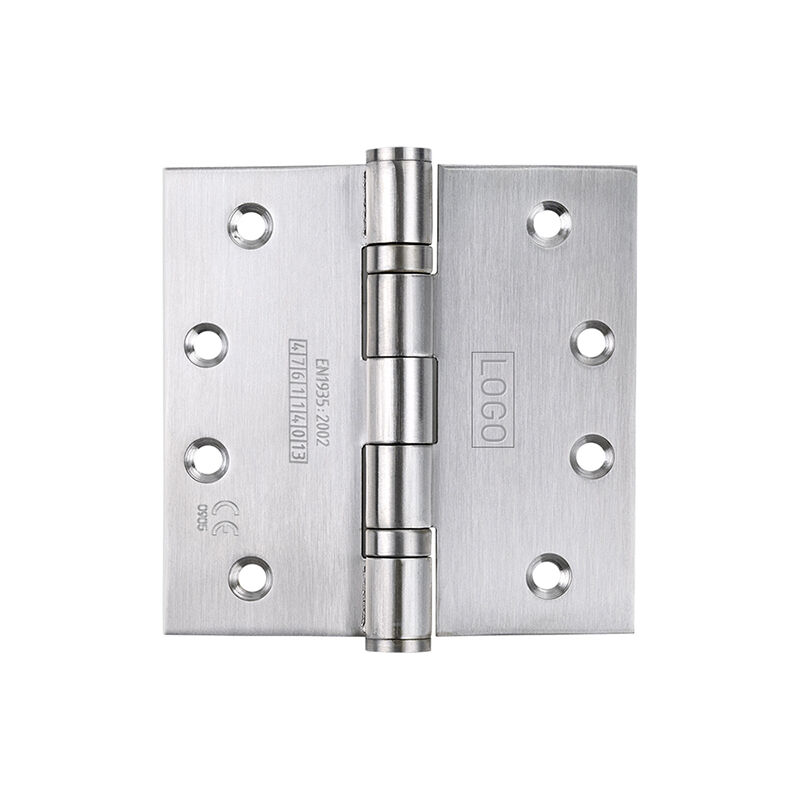
Understanding CE Hinge Certification and Regulatory Requirements
What Is CE Marking for Door and Industrial Hinges?
The CE mark on door and industrial hinges basically means they follow all those EU rules about safety, health, and protecting the environment according to the Construction Products Regulation (CPR). What this really tells us is that these hinges have passed pretty tough tests for things like how much weight they can hold and their ability to resist rust and other forms of corrosion. When manufacturers get their products certified like this, it opens doors literally and figuratively throughout the whole European Economic Area (EEA). Plus, companies face fewer headaches down the road because there's less chance of getting stuck with legal problems from selling hardware that doesn't meet basic standards.
EN 1935 Standard for Single-Axis Hinges: Quality and Performance Benchmark
The EN 1935 standard classifies single-axis hinges into 13 performance grades based on durability, safety, and environmental resilience. Key evaluation criteria include:
| Test Type | Purpose |
|---|---|
| Load Capacity (Grade 1–13) | Measures hinge strength under static weight |
| Cycle Durability (20,000–200,000 cycles) | Tests operational lifespan |
| Salt Spray Corrosion | Evaluates resistance to rust in harsh conditions |
Hinges rated at Grade 8 or higher are required for fire doors in public buildings, ensuring integration with critical safety systems such as self-closing mechanisms and intumescent seals.
Compliance with European Economic Area (EEA) Regulations for Hardware Exports
The CE mark helps products move smoothly across borders in the European Economic Area because it ensures everyone follows similar technical standards for building materials and equipment. Products that don't meet these requirements face serious consequences at customs checkpoints. The EU can reject them outright or slap manufacturers with penalties reaching as high as fifty thousand dollars according to their Market Surveillance rules from 2019. Companies need to keep detailed records if they want to stay compliant. This includes tracking where materials come from and having proper declarations showing conformity with EU standards. These documents become essential during inspections and help avoid those frustrating supply chain delays when shipments get held up unexpectedly.
Integration of CE Hinges with Building Codes and Fire Safety Standards
Fire doors need CE certified hinges to meet requirements set out in standards such as BS 476-22 and the EU Directive 305/2011. These hinges keep doors working properly during fires, which helps contain flames within specific areas for anywhere between half an hour up to two full hours. According to figures from the European Fire Safety Alliance in 2023, buildings across 72% of EU countries lose their official fire safety approval if they install hinges that aren't CE marked. That makes sense when we think about protecting people inside structures during emergencies. After all, nobody wants to find out too late that their supposedly safe building isn't actually compliant with basic life saving regulations.
Safety and Durability: Core Advantages of CE-Compliant Hinges
Load Capacity and Long-Term Durability Testing in CE-Certified Hinges
CE certified hinges go through rigorous testing according to EN1935 standards, capable of handling weights up to 40 kilograms and surviving around 200 thousand open-close cycles. That translates roughly to fifteen plus years of constant usage in places where doors get opened all day long, think busy hospital corridors or bustling airport terminals. Third party labs actually put these hinges through their paces repeatedly until they're sure there's absolutely no bending or warping even when subjected to full weight capacity. The real world benefit? Facilities report cutting down on both repair work and complete replacements by nearly 60 percent versus regular off-the-shelf hinges without proper certification, according to findings from the Hardware Compliance Report released last year.
Corrosion Resistance and Operational Safety of CE Hinges
CE-certified hinges undergo salt spray testing for 500+ hours, simulating a decade of exposure in coastal environments. Constructed from electroplated stainless steel, they resist rust while preserving smooth operation. Integrated safety features, such as pin retention systems, meet EN1935 requirements and eliminate pinch hazards in schools, offices, and healthcare facilities.
Hinge Grades and Their Impact on Fire Resistance and Structural Integrity
The EN1935 standard categorizes hinges across 13 different performance levels depending on how well they hold up mechanically and against environmental factors. The top tier Grade 10+ hinges can actually stay intact for a full 90 minutes when exposed to temperatures reaching 800 degrees Celsius, which makes these particularly useful in fire rated door assemblies. When paired with those expanding seals known as intumescent materials, these hinges help contain both smoke and flames effectively. This combination plays a key role in passive fire protection systems that building codes like CPR 305/2011 require for safety compliance.
CE-Marked Fire Door Hinges and Passive Fire Protection
The Role of CE Hinges in Maintaining Fire Door Effectiveness
Fire door hinges with CE certification can actually withstand temperatures over 800 degrees Celsius for around two hours before they start to warp or fail completely. Standard hinges just don't cut it in these conditions. The EN 1935 certified versions come with special heat resistant metals built right in, plus those self lubricating bearings that keep things moving even when panic sets in during an emergency situation. Combine these hinges with those intumescent seals that puff up once they hit about 200 degrees Celsius to close off any gaps between doors and frames, and suddenly we're talking about something life saving. Smoke inhalation accounts for roughly three quarters of all deaths related to fires according to the National Fire Safety Council report from last year.
How EN 1935 Certification Supports Fire Door Compliance
EN 1935 defines eight critical performance benchmarks for fire door hinges, including:
| Requirement | Threshold | Purpose |
|---|---|---|
| Cycle Durability | 200,000+ closings | Ensures longevity in high-use areas |
| Temperature Resistance | 90+ minutes at 800°C | Prevents hinge warping during fires |
According to UK fire safety audits, certified hinges reduce door misalignment failures by 89% compared to non-compliant alternatives, reinforcing their importance in meeting CPR 305/2011 requirements.
Case Study: Preventing Fire Spread Through Proper CE Hinge Installation
A 2023 retrofit of a Madrid office complex demonstrated the impact of upgrading to CE-compliant hardware:
- Problem: Historic structure used non-rated hinges on over 60 fire doors
- Solution: Installed EN 1935 Grade 14 hinges with 120-minute fire resistance
- Outcome: During a 2024 electrical fire, 98% of flames were contained to one floor—up from a previous containment rate of 50%
This improvement highlights how proper hinge selection maintains door alignment under thermal stress and significantly enhances life safety.
Reducing Risk and Liability with CE-Certified Hinge Solutions
Quality Assurance in Manufacturing CE-Compliant Industrial Hinges
Companies making CE certified hinges have pretty strict quality checks in place during manufacturing. They test batches regularly and keep track of materials used throughout production to hit those EN 1935 standards. According to research from the Manufacturing Safety Institute back in 2023, there's actually a big difference between certified and non certified products when it comes to defects. The study showed around 62 percent fewer problems with the certified ones. What does this mean for actual performance? Well, these hinges can handle loads up to about 120 kilograms each pair, and they're built to last through at least 200 thousand operations before showing wear. Fewer defects translates directly into fewer warranty issues down the road and less chance of failures happening out in the field where nobody wants them.
Minimizing Legal and Financial Liability Through Compliance
Non-compliant hardware contributes to 34% of building code violations in the EEA (European Commission, 2023). CE certification provides auditable proof of conformity, protecting manufacturers and installers from litigation arising from system failures. Projects using CE-certified components reported 41% fewer insurance claims related to door malfunctions, demonstrating the financial benefits of compliance.
Increasing Regulatory and Insurance Scrutiny on Non-Certified Hardware
The EU safety regulators ramped up their hardware checks in 2024, boosting inspection numbers by around 18 percent overall. About three quarters of these inspections focused specifically on whether hinges had proper certification. At the same time, nearly nine out of ten commercial property insurers are now demanding CE markings for equipment. Why? The insurance data shows properties without certified hardware tend to see fire claims jump by about $740k on average according to the latest Insurance Industry Analysis report from this year. With these developments happening across Europe, getting CE certification isn't just good practice anymore it's becoming essential for anyone involved in property risk assessment or insurance underwriting processes.
Market Access and Export Opportunities Enabled by CE Marking
Gaining Entry to the European Market with CE-Certified Hinges
The CE mark acts as a must-have ticket for getting hinges onto shelves across the European Economic Area. Think of it as proof that these products meet the required safety standards, including things like EN 1935 regulations. Products that pass certification show they can handle at least 25 kilograms of weight and should last through around 40 thousand opening and closing tests before failing. Get this right? Great business. Miss it? Packages get stuck at customs checkpoints throughout Europe, causing major headaches for distributors and costing companies thousands in fines and lost time.
Overcoming Trade Barriers Using CE Compliance as a Competitive Advantage
CE certification accelerates customs clearance across 30+ EEA countries, cutting administrative delays by up to 78%. Exporters leverage this advantage to gain trust in competitive sectors like institutional construction and fire safety systems. In 2023 alone, EU border agencies intercepted over 12,000 shipments of non-CE marked hardware, highlighting the financial consequences of non-compliance.
Global Recognition of CE Standards Beyond the EEA
The CE mark might be legally required just within Europe, but it's actually seen as a sign of good quality across over 50 nations worldwide. Places like Dubai and Singapore have started recognizing this European standard too. According to some recent trade reports from last year, around 4 out of every 10 regulatory bodies outside the EEA will consider CE certification when assessing whether products meet their own standards. For companies making things meant for global sales, this kind of international acceptance means they don't have to redo all their testing multiple times for different markets. Saves them money and gets products onto store shelves faster than if they had to go through separate approval processes everywhere.
FAQs on CE Hinge Certification
What does CE marking signify for hinges?
CE marking signifies that door and industrial hinges conform to EU safety, health, and environmental protection guidelines, particularly following the Construction Products Regulation (CPR).
How does the EN 1935 standard affect hinge quality?
The EN 1935 standard evaluates hinges based on durability, safety, and environmental resilience, classifying them into 13 different performance grades.
Why is CE certification important for fire safety compliance?
CE certification is crucial for fire safety standards as it ensures that hinges maintain their integrity during fires, crucial for containing flames and smoke.
How does CE marking affect market access in Europe?
CE marking is essential for gaining market access in the European Economic Area, ensuring compliance with safety standards and facilitating smooth customs clearance.
Is CE certification recognized globally?
Yes, although primarily required in Europe, CE certification is respected internationally and can be a quality benchmark in markets like Dubai and Singapore.
Table of Contents
- Understanding CE Hinge Certification and Regulatory Requirements
- Safety and Durability: Core Advantages of CE-Compliant Hinges
- CE-Marked Fire Door Hinges and Passive Fire Protection
- Reducing Risk and Liability with CE-Certified Hinge Solutions
- Market Access and Export Opportunities Enabled by CE Marking
- FAQs on CE Hinge Certification