
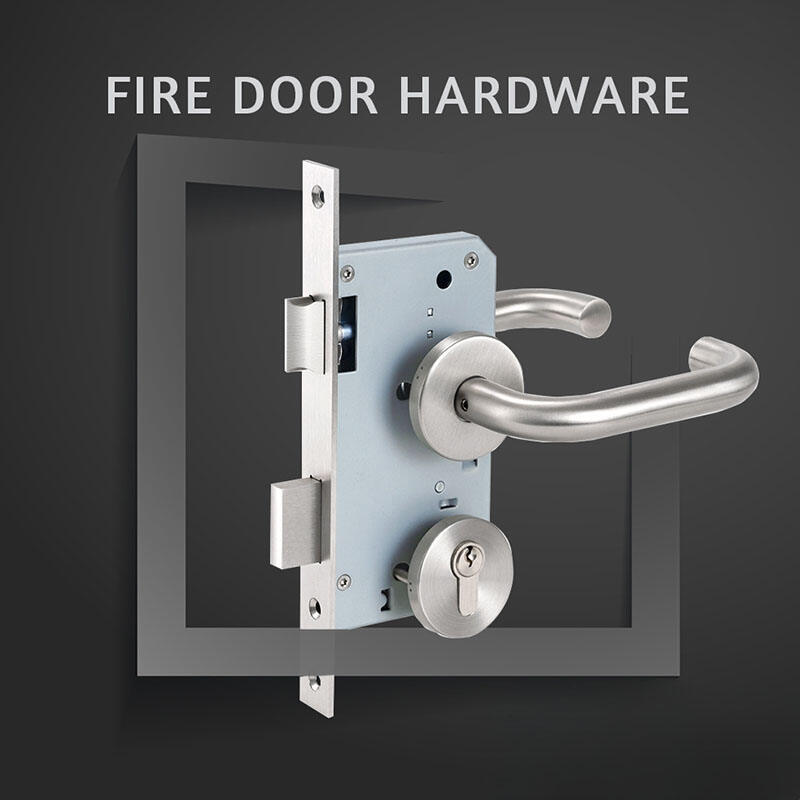
Understanding the Role of Sash Locks in Fire Door Systems
What is a Sash Lock and How It Works in Door Locking Mechanisms
Sash locks are those mortise style locks we install on fire rated doors to keep them secure without breaking any fire safety rules. What makes these locks special is their dual action design that brings together both a deadbolt and a regular latch. This combination creates what's called a compression seal around the door frame which stops smoke from getting through during fires. Inside the lock there's actually a spring mechanism that keeps everything engaged properly even when things get really hot. Doors equipped with sash locks stay intact much longer in case of a fire because this internal spring continues working despite the intense heat exposure.
The Integration of Sash Locks in Fire-Rated Door Assemblies
Fire rated doors need to hold up against temperatures over 1000 degrees Fahrenheit (about 538 Celsius) for at least an hour straight. The best sash locks incorporate materials that resist heat damage, including zinc alloy parts and stainless steel components. These products meet important safety standards such as BS 476-22 and EN 1634-1, which are industry benchmarks for fire resistance. What makes these locks special is how they handle door distortion during intense heat events. Regular locking mechanisms often malfunction under extreme conditions, but fire rated versions maintain their function even when metal expands and warps from the heat.
| Material | Melting Point (°F) | Corrosion Resistance | Compliance Standard |
|---|---|---|---|
| Stainless Steel | 2,550 | High | BS 476-22 |
| Zinc Alloy | 787 | Moderate | EN 1634-1 |
Mechanical Advantages of High-Quality Sash Locks in Emergency Egress
During evacuations, sash locks offer three key benefits:
- Fail-safe operation: Spring mechanisms remain functional despite up to 20–30% door frame deformation, as verified under UL 10C testing.
- Single-motion egress: Lever handles disengage both latch and deadbolt simultaneously, reducing exit time by 2–3 seconds compared to multi-step locking systems.
- Thermal stability: High-grade steel components maintain structural integrity at temperatures up to 1,200°F (649°C), surpassing minimum fire door requirements.
These features support compliance with NFPA 80 and help reduce the risk of smoke inhalation during delayed egress, a factor linked to increased injury rates in fire incidents.
Selecting the Right Sash Lock for Different Fire Door Types and Security Needs
Choosing the right sash lock based on door type and security needs for residential applications
Picking the right sash lock really comes down to what kind of door we're dealing with and how secure it needs to be. Timber doors work best with models that have adjustable strike plates since wood tends to expand and contract with seasons by around 3mm. When looking at composite doors, go for ones made with stainless steel or brass parts because they stand up better against moisture damage over time. Metal fire doors need something different altogether though they get used so often, so look for those with reinforced bolts that can handle constant operation without failing. For places where security matters most like front entrances, installing a 5-lever sash lock that meets BS3621 standards makes sense. These locks actually satisfy what insurers expect when assessing risk factors related to potential break-ins.
Performance differences in timber, composite, and metal fire doors
- Timber doors: Require sash locks with at least 1.5mm tolerance gaps to avoid binding during thermal expansion.
- Composite doors: Perform best with IP44-rated weather-resistant locks to resist salt spray and moisture damage.
- Metal doors: Need 12mm throw bolts and hardened steel gears to maintain alignment under repeated stress.
Balancing ease of use with robust locking action across door types
Today's fire rated sash locks come with ergonomic levers that need less than 25 Newtons of force to operate. They also feature anti snap cylinders which can handle up to 500 Newton meters of torque. For places like hospitals and schools, there are special dual function versions available. These let people exit quickly without needing a key while still keeping Grade 1 security standards intact. Lab tests have found around 92 percent of these locks continue working smoothly even after going through 200 thousand opening and closing cycles. That kind of performance over time makes them pretty reliable for installation in critical buildings where safety matters most.
Compatibility with multi-point locking systems in modern fire doors
Modern fire doors typically come with stiles around 45mm thick designed specifically for housing sash locks equipped with between three to five hook bolts that all work at once when closed. The multiple locking points really make a difference too. Tests conducted by the BRE Group back in 2024 showed these systems can boost structural strength against forced entry by nearly 37% compared to standard single point locks. When installing these doors, it's important to check they'll work well with other components like electromagnetic door holders so everything functions smoothly together within existing access control systems across buildings.
Compliance with Security Standards: BS3621, Kitemark, and Insurance Requirements
Security Standards (BS3621) and Insurance Requirements for Approved Sash Locks
The British Standard 3621, often called BS3621, establishes pretty tough requirements for sash locks. These include being able to stand up against drilling attempts, picking techniques, and even physical attacks from would-be intruders. For a lock to get certified under this standard, it needs hardened steel bolts that extend at least 20mm when engaged. Plus, they should work with keys on both sides so no one can simply twist something from inside to open them up. Most insurance companies actually require these standards before they'll validate policies. Looking at the numbers makes sense why: according to the 2023 Security Hardware Report, about two thirds of all property claim rejections mentioned non compliant hardware as part of their reasoning.
How Certified Sash Locks Reduce Property Insurance Premiums
Insurers view BS3621 and Kitemark-certified sash locks as proven risk-reduction measures, frequently offering premium reductions of 10–15% for compliant installations. Multi-occupancy buildings using certified hardware report 38% fewer forced-entry incidents, aligning directly with insurer loss-prevention goals.
Third-Party Testing and Kitemark Certification in Fire Door Compliance
Testing facilities put sash locks through their paces against twelve different ways people might try to break them down, things like cutting with angle grinders or messing with heat sources. When a product gets the Kitemark stamp from BSI, it means they've met standards for fire resistance lasting at least an hour. Properties fitted with these certified products tend to do really well during inspections too, passing around 92 percent of the time when auditors check fire safety measures. That kind of track record makes sense why so many builders specify this type of security hardware nowadays.
Internal vs. External Applications: Durability and Environmental Resistance
Use of Sash Locks on Internal and External Doors: Durability and Environmental Resistance
Sash locks face different demands depending on location. Internal fire doors primarily experience mechanical wear, commercial environments average 2,800 operational cycles annually. External doors, however, must endure extreme conditions: temperature swings from -20°C to 50°C, humidity above 80% RH, and exposure to airborne contaminants such as de-icing salts.
| Environment | Key Stressors | Material Requirement |
|---|---|---|
| Internal | Mechanical wear | Hardened steel (¥45 HRC) |
| External | Salt spray, UV degradation | 316 stainless steel |
Corrosion Resistance and Material Quality in Exterior Fire Door Applications
Stainless steel sash locks rated for marine environments can last around 3,000 hours in salt spray tests according to ASTM B117 standards, making them about ten times more resistant to corrosion compared to regular zinc plated versions. When installing near the coast, look for locks that carry ISO 9223 Class C4 certification. This rating means they'll hold up better where there's lots of salt in the air, specifically when chloride levels are above 15 mg per square meter per day. For those watching their budget, hot dip galvanized models might be worth considering. These have protective coatings that should last approximately 25 years and meet requirements set out in EN ISO 1461 specifications.
Ensuring Long-Term Reliability and Performance of Fire Doors with High-Quality Sash Locks
Impact of Lock Quality on Door Integrity During Prolonged Use
Good quality sash locks help keep fire doors properly aligned and maintain their pressure seal for many years. The better ones usually have stainless steel parts inside instead of cheaper zinc alloys. These stainless steel components last much longer too showing around 90 percent less wear after going through about ten thousand open close cycles. When these locks hold up well over time, they stop gaps from forming which is really critical because smoke seals get compromised when there's any space at all between doors. Just think about it, research from IFSS Global in 2023 shows that something as small as a 1mm gap can cut down fire resistance capabilities by almost two thirds. That kind of performance makes all the difference in safety situations.
Case Study: Failure Analysis of Substandard Sash Locks in Fire Door Systems
A 2023 audit of 150 retrofitted fire doors found that 34% equipped with budget sash locks failed containment tests within five years. Common failure modes included:
| Failure Mode | Occurrence Rate | Average Failure Time |
|---|---|---|
| Latch deformation | 41% | 3.8 years |
| Spring mechanism fatigue | 29% | 4.2 years |
| Bolt misalignment | 19% | 5.1 years |
The study concluded that matching sash lock specifications to door weight and usage eliminated 82% of premature failures.
Maintenance Cycles and Wear Resistance in Commercial Building Environments
Regular checks on sash locks in commercial buildings every six months is pretty much a must these days for staying compliant with regulations. The better quality models featuring hardened steel rollers plus self lubricating bearings tend to last way longer than average ones. We're talking around 300 daily operations before showing wear and tear, which makes them roughly three times tougher than what most homes typically use. Maintenance really does matter though. Buildings that stick to proper maintenance routines find their fire doors still working at about 94% efficiency even after 15 years. Meanwhile places that skip regular checkups see performance drop down to only 67% by then. That kind of difference speaks volumes about why good maintenance practices pay off in the long run.
FAQ
What is a sash lock, and how does it function in fire doors?
A sash lock is a type of mortise lock that combines a deadbolt and a latch, providing a compression seal to prevent smoke from entering during fires. Its spring mechanism remains functional under high heat, ensuring the door stays secure during intense fire exposure.
What materials are best for sash locks in fire-rated doors?
Sash locks made with heat-resistant materials like stainless steel and zinc alloy are ideal for fire-rated doors. These materials not only resist damage under high temperatures but also meet important safety standards like BS 476-22 and EN 1634-1.
How do sash locks contribute to safe evacuation during emergencies?
Sash locks enable fail-safe operation, maintaining function despite door frame deformation. They allow single-motion egress by disengaging both latch and deadbolt simultaneously, cutting exit times significantly.
How do certified sash locks impact insurance premiums?
Certified sash locks, such as those meeting BS3621 standards, are considered effective risk-reduction measures by insurers. They can lead to premium reductions and lower the risk of forced-entry incidents.
How does environmental exposure affect sash locks?
Sash locks on external doors must withstand temperature extremes, humidity, salt spray, and other stressors. High-quality materials like 316 stainless steel provide durability and resistance to environmental degradation.
Table of Contents
- Understanding the Role of Sash Locks in Fire Door Systems
- Selecting the Right Sash Lock for Different Fire Door Types and Security Needs
- Compliance with Security Standards: BS3621, Kitemark, and Insurance Requirements
- Internal vs. External Applications: Durability and Environmental Resistance
- Ensuring Long-Term Reliability and Performance of Fire Doors with High-Quality Sash Locks
- FAQ