
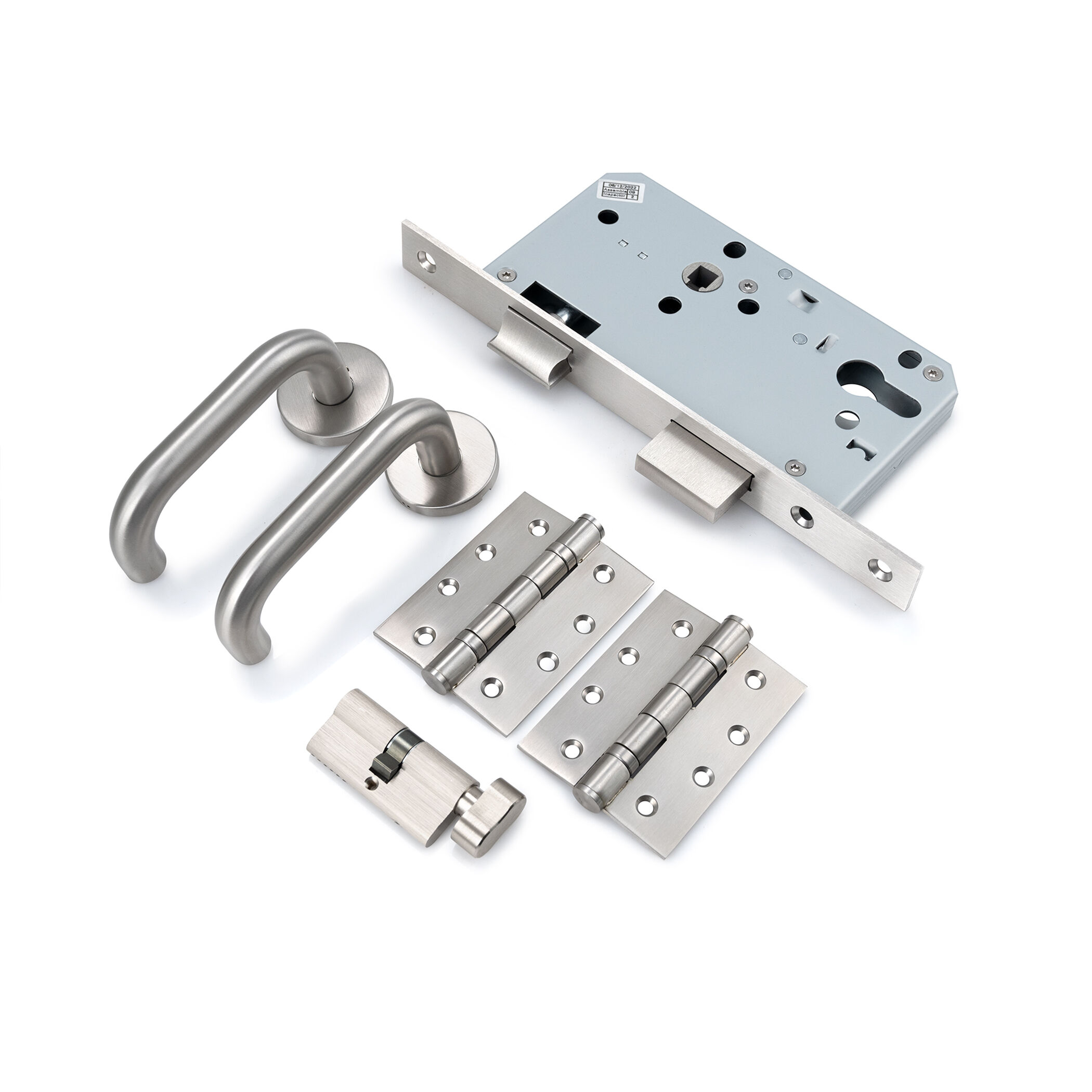
Functionality and Room-Specific Applications
Passage, Privacy, Entrance, and Dummy Functions Explained
Modern lever door handles are engineered for distinct operational needs:
- Passage (interior doors with no locking)
- Privacy (bathrooms/bedrooms with internal locking)
- Entrance (exterior doors requiring keyed security)
- Dummy (decorative pulls for closets or pantries)
This functional segmentation allows builders to precisely align hardware with room safety, security, and accessibility requirements.
How Function Types Influence Builder Selection
Builders prioritize entrance-grade handles for external doors due to their reinforced cylinders and ANSI Grade 1 certification, which meet commercial durability standards. Privacy functions dominate in residential bathrooms, with 63% of multi-family projects specifying them for consistent tenant safety (Building Hardware Alliance 2023).
Strategy for Matching Function Type to Room Usage
Optimal pairings follow four functionality indicators from architectural best practices:
- Frequency of use (high-traffic = heavy-duty materials)
- User demographics (child-safe lever angles in daycare centers)
- Emergency egress needs (push-button privacy for hospitals)
- Maintenance accessibility (dummy handles above 54" for custodial zones)
Case Study: Lever Handle Functionality in Multi-Unit Developments
A Sydney apartment complex reduced installation time by 22% using standardized privacy handles across 300 bathrooms. Builders eliminated mismatched hardware orders by pre-specifying:
- Schlage L9000 series for unit doors
- Dummy levers for shared storage closets
- Passage handles for interior corridors
Trend Toward Standardized Function Sets Across Projects
National builders now adopt manufacturer-curated function bundles like "Hospitality 4-Pack" (1 entrance + 2 privacy + 1 dummy), achieving 98% door preparation compatibility. This shift streamlines procurement while maintaining ADA-compliant lever heights and 35° return angles.
Durability, Materials, and Lifecycle Value
Solid Brass vs. Stainless Steel: Performance in High-Trafficked Areas
Brass stands out when it comes to resisting corrosion, which is why many choose it for areas near the coast where salty air really takes a toll on materials. On the other hand, stainless steel holds up well in busy commercial spots that see constant use. Tests according to ASTM F1567 standards show these metal doors can handle around 350 thousand operations before showing signs of wear. Looking at long term performance, research indicates that brass keeps about 94 percent of its original look even after sitting through ten years of humidity. Meanwhile stainless steel manages to maintain nearly all its appearance too, retaining roughly 98 percent in drier environments. Both metals have their strengths depending on what kind of setting they'll be used in.
Cycle Testing Standards and Longevity Expectations
Industry benchmarks require lever handles to endure a minimum of 150,000 actuations without failure. Premium-grade handles exceed this by 33%, with third-party verified testing showing:
| Material | Average Cycles Before Wear | Maintenance Interval |
|---|---|---|
| Solid Brass | 275,000 | 8-10 years |
| Stainless Steel | 350,000+ | 12-15 years |
Extended maintenance intervals help offset higher upfront costs in multi-residential projects.
Industry Paradox: Cost vs. Lifecycle Value in Material Choice
Stainless steel lever handles cost anywhere from 25 to 40 percent more than brass ones upfront, but they last about half again as long before needing replacement, which makes them much better value for money in places like schools and other big buildings where handles get used constantly. Educational institutions that switched to stainless steel have found their total costs drop by around 63% when looking at what things cost over two decades. Still, most home builders stick with brass for residential work because looks matter so much to homeowners. Even though stainless steel performs better technically, aesthetics win out in many cases, according to industry surveys showing nearly 8 out of 10 contractors prefer brass for homes.
Compliance with Australian Standards and Accessibility Requirements
Meeting Fire Ratings and Egress Safety Regulations
Lever door handles must comply with AS 1905.1 fire-rated door requirements to ensure emergency exits remain functional during evacuations. A 2023 Fire Code Reform study found that faulty door hardware contributed to 78% of multi-story residential fire incidents, highlighting the importance of 30/60/90-minute fire-resistance ratings.
ADA Compliance and Universal Design in Residential Builds
In Australia, they stick to AS 1428.1 accessibility guidelines which require lever handles instead of knobs for people who struggle with grip strength. While this isn't exactly called ADA compliance in legal terms, it does match up with those universal design ideas we see around the world. A recent study in the 2024 Universal Design Index found something pretty interesting too. People with arthritis reported being able to live more independently when their homes had lever handles rather than regular door knobs. The numbers show about a 40% improvement in daily living tasks for these individuals. Makes sense really, since turning a knob can be so frustrating when hands don't work quite right anymore.
Ergonomic Benefits for Children, Elderly, and Disabled Users
The downward-press motion of lever handles reduces wrist strain by 60% versus twisting knobs (Occupational Therapy Australia, 2023). This advantage is critical in aged-care facilities, where 92% of residents rely on assistive hardware for safe navigation.
Controversy Analysis: Aesthetic Trade-offs in Accessible Design
A 2022 Architectural Digest survey revealed 58% of designers resist specifying compliant handles due to perceived style limitations. However, manufacturers now offer more than 200 finish options on accessible lever designs, effectively bridging the gap between functionality and modern trends like matte black and brushed brass.
Ease of Installation and Builder Efficiency
Quick-Mount Systems and Time-Saving Benefits for Contractors
According to Solar Builder Magazine from last year, quick mount systems can cut down on installation time by roughly 36% when compared with older techniques. What makes them so fast? Well, they come with parts that are already aligned properly and don't need tools for adjustments. Contractors report being able to put in a lever handle on each door within just five minutes flat. This streamlined approach really helps prevent mistakes during large scale projects. Think about those big developments where hundreds of doors get installed at once - maybe even over 500 units in one go. The fewer errors there are, the better the overall quality ends up being for everyone involved.
Compatibility with Standard Door Preps and Framing Methods
Most modern lever handles work with around 90 percent of standard door setups according to ANSI specifications. They fit right into those common 2-1/8 inch bore holes and 1 inch crossbores without needing extra modifications. For builders working on prefab door installations, this is huge because these types of doors make up nearly 8 out of 10 new homes built today, per NAHB stats from last year. The stainless steel backplates are pretty tough too, handling backsets anywhere between 45mm and 70mm. This means doors stay aligned properly over time, even when building materials shift slightly during settling periods after installation.
Aesthetic Flexibility and Market Demand for Modern Door Handles
Modern Design Trends Favouring Minimalist Lever Profiles
Builders increasingly specify lever handles with minimalist profiles to match contemporary architecture’s clean lines. A 2023 Residential Hardware Trends Report found that 63% of new multi-unit developments have shifted from bulky knobs to streamlined levers. These designs reduce visual clutter while preserving ergonomics, especially in entryways and shared corridors.
Finishes and Customization Options for Interior Cohesion
Available in finishes such as matte black, brushed nickel, and polished brass, modern lever handles allow seamless coordination with interior schemes. Coordinated hardware can increase perceived property value by up to 7% (NAHB 2023). Customizable backplates and lever lengths support integration across door types—from solid-core fire-rated units to glass-paneled partitions.
Warranty, Manufacturer Reliability, and Builder Confidence
Ten-year mechanical warranties are a key factor in builder decision-making, reducing long-term liability in rental and strata properties. Over 85% of contractors in a 2024 Builder Preferences Survey ranked manufacturer reliability above initial cost when selecting hardware. Product lines with backward-compatible components also prevent delays during retrofits or replacements.
FAQ
What are the differences between passage, privacy, entrance, and dummy lever door functions?
Passage levers are for non-locking interior doors, privacy levers are for bathrooms and bedrooms with internal locks, entrance levers offer keyed security for exterior doors, and dummy levers are decorative pulls for closets or pantries.
Why do builders prioritize entrance-grade handles for external doors?
Builders prefer entrance-grade handles for their reinforced cylinders and ANSI Grade 1 certification, providing them with enhanced security and durability suitable for external applications.
What factors should builders consider when choosing lever handle materials?
Builders should consider the environment and the level of use. Solid brass is great for corrosion resistance, especially in coastal areas, while stainless steel is preferred for its durability in high-traffic commercial areas.
How do quick-mount systems benefit contractors?
Quick-mount systems reduce installation time by approximately 36%, streamline the installation process, and help prevent errors, enhancing the overall quality for large-scale projects.
What aesthetic options are available for modern lever door handles?
Modern lever handles come in various finishes like matte black, brushed nickel, and polished brass, with numerous customizations available, allowing coordination with diverse interior design schemes.
Table of Contents
- Functionality and Room-Specific Applications
- Durability, Materials, and Lifecycle Value
- Compliance with Australian Standards and Accessibility Requirements
- Ease of Installation and Builder Efficiency
- Aesthetic Flexibility and Market Demand for Modern Door Handles
-
FAQ
- What are the differences between passage, privacy, entrance, and dummy lever door functions?
- Why do builders prioritize entrance-grade handles for external doors?
- What factors should builders consider when choosing lever handle materials?
- How do quick-mount systems benefit contractors?
- What aesthetic options are available for modern lever door handles?