
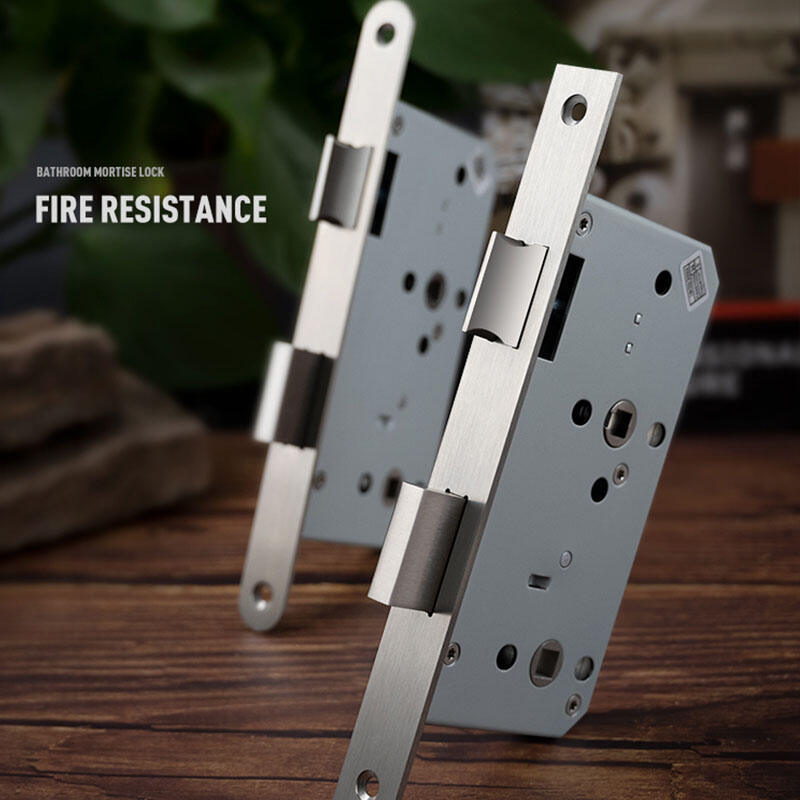
Fire Door Locks and Life-Safety Egress: Design Principles for Unimpeded Escape
Fail-Safe vs. Fail-Secure Operation in Emergency Scenarios
There are basically two ways fire door locks work when things go wrong: fail-safe mode where doors unlock automatically when there's no power or the fire alarm goes off, and fail-secure mode where doors stay locked until power returns. Most building codes like NFPA 101 require exit doors to be set to fail-safe because people need to get out quickly in emergencies. The electromagnetic locks used here have to release almost instantly once the alarm sounds or power cuts out so folks aren't blocked from escaping. Fail-secure locks do have their place in secure areas inside buildings, but putting them on actual exits is dangerous business. If someone accidentally installs these on escape routes, people could end up trapped inside during a real fire situation, which completely contradicts what safety regulations are supposed to protect against.
Single-Action Egress Requirements and Human Factors Under Stress
Most building regulations across the country mandate that emergency exit hardware must be operable with just one simple movement. Think pushing a bar, pulling down a handle, or twisting a lever. Why? Because when people are really stressed out, their ability to think straight plummets by around 80%, according to research published in the Journal of Applied Psychology back in 2022. That's why complicated tasks like turning keys or performing two separate motions simply don't work when folks are panicking. Good quality fire doors need to incorporate certain essential design elements focused on how humans actually behave in emergencies. These include:
- Tactile, shape-discriminative hardware identifiable by touch in darkness or dense smoke
- Illuminated exit signage compliant with BS 5266–1 visibility requirements
- Zero-latency release mechanisms operable using body weight alone
These elements align with instinctive physical responses—forward pressure, downward leverage, or lateral push—minimizing decision latency and preventing evacuation bottlenecks.
Regulatory Foundations: BS EN 1125 and BS EN 179 for Fire Door Lock Compliance
Key Differences Between Panic Exit (EN 1125) and Emergency Exit (EN 179) Fire Door Locks
The British Standards BS EN 1125 and BS EN 179 cover different types of fire door hardware that work together but cannot be swapped out for each other. These standards mainly differ based on how risky the building's occupancy is and what people typically do there. Standard EN 1125 specifically covers panic exit devices used in places with lots of people like stadiums, shopping malls, and train stations. When crowds get big and everyone wants to leave quickly, these doors need to open instantly without anyone having to think about it. The standard specifies that horizontal push bars must cover at least 60% of the door width. They're built so pressure spreads evenly across the whole door surface and won't get stuck even when pushed hard by many people at once.
EN 179 covers emergency exit hardware designed for places where people work regularly but aren't packed in tight spaces. Think office back doors or those maintenance areas down the hall. The standard assumes folks who use these exits know how to get out properly. The spec allows for lever handles that need to be turned down, which takes some hand coordination but works well enough when there's no rush involved. Most people can manage this without trouble during normal operations.
What makes these two standards different comes down to how people actually behave in emergencies. The EN 1125 push bar works with what we naturally do when crowds are moving fast - pushing forward instinctively. The EN 179 lever requires someone to remember to turn it, assuming they still have good motor skills during stressful situations. Neither option needs special tools or training, but they address different problems. EN 1125 is designed to prevent things from breaking under pressure when lots of people are trying to get out at once. EN 179 focuses more on making sure individuals don't make mistakes when operating the mechanism. These distinctions matter because real-world conditions rarely match ideal scenarios.
| Criterion | EN 1125 (Panic Exit) | EN 179 (Emergency Exit) |
|---|---|---|
| Use Case | Crowded public spaces | Controlled-access areas |
| Operation Mechanism | Horizontal push bar | Lever handle |
| User Cognitive Load | Minimal (intuitive push) | Moderate (rotation motion) |
| Critical Design Focus | Crowd pressure distribution | Individual usability |
Selecting hardware outside its designated standard—e.g., installing EN 179 levers on stadium exit doors—creates life-threatening delays and violates regulatory compliance.
Fire Door Lock Certification and Assembly Integrity: Why Hardware Choice Determines Evacuation Reliability
The Certification Cascade: How an Uncertified Fire Door Lock Invalidates the Entire Fire-Rated Assembly
Fire doors aren't just individual parts stuck together; they're complete safety systems made up of the door itself, frame, special expanding seals, hinges, and all the hardware. These components must work together as one unit when exposed to intense heat and physical forces during a fire. When someone installs a lock that hasn't been properly certified, it creates problems throughout the whole system. Suddenly, none of the fire rating applies anymore, even if every other part meets requirements. Why? Fire resistance tests like BS EN 1634-1 only look at setups that have been officially tested as complete units. A lock that hasn't gone through this process might bend out shape, get stuck, or break the seals when temperatures rise. This can create dangerous gaps where deadly smoke escapes into corridors or cause parts of the building to collapse earlier than expected by the fire rating specifications.
Critical vulnerabilities introduced by non-certified hardware include:
| Compromise Point | Consequence During Fire | Impact on Evacuation |
|---|---|---|
| Structural Integrity | Lock mechanism warps/jams | Blocks egress, delaying escape |
| Seal Disruption | Gaps ≥3 mm allow rapid smoke ingress | Reduces visibility and breathable air volume |
| Frame Misalignment | Door fails to close or latch autonomously | Enables fire and smoke spread into escape routes |
The BS EN 1634-1 standard mandates that hardware undergo testing with particular door models to check how well everything works together when exposed to varying temperatures, pressure changes, and lots of opening/closing cycles. According to some fire safety experts, using non-approved hardware can actually make things fail much more often than we'd like - somewhere around 70% more failures according to their reports. For building managers looking after facilities, this means going with locks that have third-party certification marks on them. These locks need proper testing documentation showing they work specifically with the chosen door type and its fire resistance rating. The goal here is simple: get reliable operation throughout those critical 30, 60, or even 120-minute periods during a fire emergency while still making sure people can exit safely when needed.
Future-Ready Evacuation: Smart Fire Door Locks and Real-Time Egress Monitoring
Fire door locks connected through IoT technology are now working alongside building management systems to form smarter, more reactive evacuation setups. When emergencies happen, these intelligent systems will automatically open specific exit points and work hand in hand with emergency lights, smoke control from HVAC systems, and voice alarms too. Studies done in controlled environments showed that this integration can cut down on evacuation time by about 40 percent according to research published back in Safety Science in 2020. The system uses real-time occupancy detection combined with path-finding algorithms powered by artificial intelligence. These tools look at how people are moving around and where they're going, then light up the best possible escape paths while steering people clear of areas where new dangers might be forming.
These tech solutions stick closely to basic life safety rules. Smart fire door locks still work safely when there's no power thanks to built-in backup systems, and all exit points keep their simple one-step release mechanism so people can get out quickly even in emergencies. The predictive diagnostic features really boost dependability too. They watch for things like wear on moving parts, how hard latches engage, and whether doors are properly aligned. This gives maintenance staff early warnings about problems before they become serious safety issues or compliance headaches down the road.
FAQ
What is the difference between fail-safe and fail-secure fire door locks?
Fail-safe locks unlock automatically when power is lost or a fire alarm is triggered, ensuring quick egress. Fail-secure locks remain locked during power outages and are primarily used in secure areas to prevent unauthorized access.
Why are single-action egress mechanisms important during an emergency?
Single-action egress systems, like push bars, allow doors to be opened with one simple motion, reducing cognitive load during high-stress situations and ensuring rapid escape.
What is the significance of the BS EN 1125 and BS EN 179 standards?
BS EN 1125 specifies requirements for panic exit devices in crowded spaces, while BS EN 179 is for emergency exit hardware in less crowded, controlled environments. Each standard addresses different egress scenarios and user needs.
Why does lock certification matter in fire safety?
Certified locks ensure the entire fire-rated assembly's integrity by complying with safety standards, reducing the risk of mechanism failure, seal breakage, and fire spread during an emergency.
How do smart fire door locks enhance evacuation processes?
Smart locks integrate with building management systems to initiate proactive evacuation routes based on real-time data, minimizing escape times and improving safety during emergencies.
Table of Contents
- Fire Door Locks and Life-Safety Egress: Design Principles for Unimpeded Escape
- Regulatory Foundations: BS EN 1125 and BS EN 179 for Fire Door Lock Compliance
- Fire Door Lock Certification and Assembly Integrity: Why Hardware Choice Determines Evacuation Reliability
- Future-Ready Evacuation: Smart Fire Door Locks and Real-Time Egress Monitoring
-
FAQ
- What is the difference between fail-safe and fail-secure fire door locks?
- Why are single-action egress mechanisms important during an emergency?
- What is the significance of the BS EN 1125 and BS EN 179 standards?
- Why does lock certification matter in fire safety?
- How do smart fire door locks enhance evacuation processes?