
Field Notes on Architectural Hardware Retrofitting
Swapping out an old lock body during a commercial retrofit sounds straightforward on paper until technicians are standing on-site with a heavy metal door that refuses to close smoothly. Field contractors and architectural hardware installers often learn the hard way that a dimensional discrepancy of even a single millimeter in backset or spindle alignment can completely derail a tight installation schedule. When building managers, facility supervisors, or security consultants decide to upgrade building access control infrastructure through OEM replacements, getting initial measurements right is not merely a technical formality—it serves as the absolute foundation of a successful project. Over years of hands-on deployment across diverse international retrofit sites, industry experience demonstrates how meticulous front-end measuring saves countless hours of on-site frustration, eliminates unexpected door modifications, prevents costly project delays, and ultimately safeguards client trust and operational efficiency across multi-phase construction developments and building overhauls.
Unpacking the Critical Dimensional Vectors
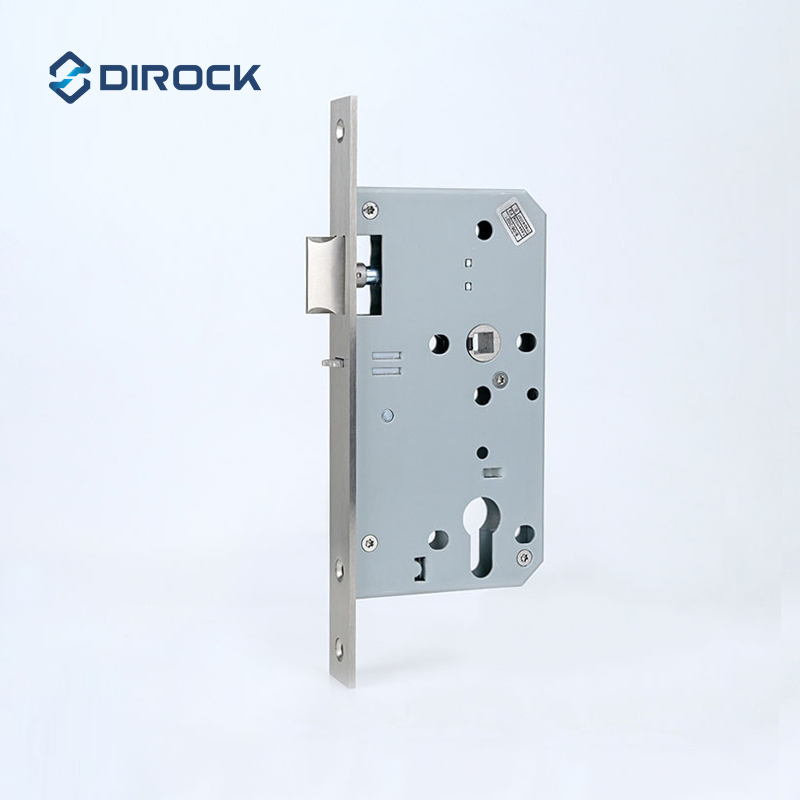
Executing a flawless OEM lock body replacement requires isolating four core measurements with absolute precision: the backset, the center-to-center distance, the faceplate dimensions, and the overall lock case thickness. The backset—measured horizontally from the leading edge of the door straight to the center of the cylinder hole—determines whether the latchbolt will clear the frame strike plate cleanly without binding or jamming during operation. Simultaneously, the center-to-center measurement, bridging the handle spindle and the cylinder follower, must match existing escutcheon plates or decorative face trims perfectly. Relying on professional digital calipers rather than a worn-out tape measure is essential for capturing these microscopic tolerances down to a fraction of a millimeter before signing off on any bulk manufacturing run, ensuring that the finished hardware fits the mortise pocket like a glove and operates smoothly under high-frequency daily usage in commercial environments.
Navigating International Compliance and Quality Benchmarks
Reliable door hardware involves far more than simply fitting into a mortise pocket; it must withstand relentless daily wear and tear in high-traffic commercial and residential environments. Seasoned security consultants consistently emphasize checking whether replacement hardware complies with established global benchmarks such as EN 12209 for European mortise locks or ANSI/BHMA specifications for North American standards. Ignoring these rigorous compliance frameworks when sourcing custom hardware can expose building owners to premature mechanical failure, liability issues, and dissatisfied occupants. Reviewing certified cycle durability, corrosion resistance test reports, and lateral side-load thresholds gives project buyers the necessary peace of mind when committing to large-scale infrastructure retrofits, architectural upgrades, and security overhauls across highly regulated global markets and institutional facilities.
Avoiding Prototyping Pitfalls and Tolerance Traps
Transitioning from legacy hardware to a newly customized OEM lock body introduces hidden engineering hurdles that frequently catch procurement teams off guard. Wooden doors naturally warp over time due to seasonal humidity shifts, and hollow-metal frames can introduce unexpected friction points if lock case dimensions are even slightly miscalculated. This is why experienced product developers rely heavily on rapid 3D CAD modeling and CNC sample machining before greenlighting mass production. Testing latch retraction smoothness, deadbolt throw extension, and key rotation clearance on a physical prototype allows engineering teams to iron out any mechanical kinks ahead of time, ensuring that thousands of mass-produced units drop right into place without requiring tedious field adjustments, awkward custom shims, or expensive rework charges.
Scaling Supply Chain Success and Manufacturing Excellence
Achieving this level of millimeter-perfect precision at scale requires robust manufacturing infrastructure, advanced automated stamping technology, and stringent quality control protocols across every production stage. Delivering reliable hardware to global markets demands dependable factory partnerships equipped with multi-axis CNC milling centers and strict metallurgical testing. Dirock exemplifies this level of industrial capability, serving as a trusted manufacturing and supply chain partner for architectural hardware brands worldwide. By combining rigorous raw material selection—ranging from heavy-duty stainless steel to durable corrosion-resistant zinc alloys—with sophisticated OEM and ODM production expertise, Dirock helps international clients streamline procurement, reduce lead times, optimize inventory levels, and scale product portfolios with absolute confidence, superior cost-effectiveness, and uncompromised quality.
Building Long-Term Brand Value Through Reliable Hardware
Ultimately, the success of any hardware brand relies on the consistent performance and durability of its product offerings in the field. When distributors and contractors can install replacement lock bodies quickly and securely without callbacks or warranty claims, brand reputation naturally flourishes across competitive markets. By partnering with advanced production facilities like Dirock, hardware companies gain access to tailored engineering solutions, stable supply chain logistics, and superior manufacturing craftsmanship that elevates their market standing. Investing in precision-measured, rigorously tested hardware components is the smartest strategic choice for achieving sustainable growth and customer loyalty in the global security industry.
Table of Contents
- Field Notes on Architectural Hardware Retrofitting
- Unpacking the Critical Dimensional Vectors
- Navigating International Compliance and Quality Benchmarks
- Avoiding Prototyping Pitfalls and Tolerance Traps
- Scaling Supply Chain Success and Manufacturing Excellence
- Building Long-Term Brand Value Through Reliable Hardware