
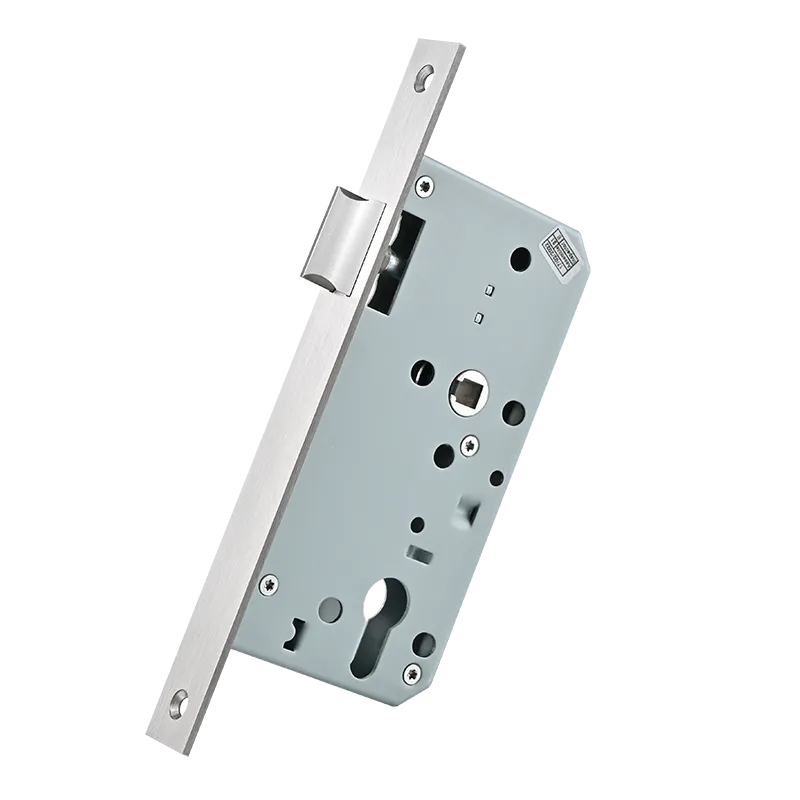
Selecting the ideal mortise lock for modern commercial construction, architectural upgrades, or large-scale institutional developments is a massive decision that heavily impacts daily security, building safety, and long-term maintenance overhead. Unlike simple residential door hardware, heavy-use commercial buildings—such as bustling office skyscrapers, regional hospitals, educational campuses, and municipal centers—experience continuous heavy daily foot traffic and face strict building code regulations. Based on extensive field engineering experience and project supply insights, building managers often make the costly mistake of prioritizing cheap initial acquisition costs over proven structural durability and international certification compliance. Understanding how to evaluate technical parameters, metal alloys, and global compliance standards guarantees that your investment delivers reliable protection and physical security over decades of intensive operation across diverse global environments.
Decoding Safety Standards and Regulatory Compliance
When specifying any high-grade mortise lock for institutional or commercial facilities, compliance with recognized international standards is an absolute must. In many global markets, especially across Europe and regions adopting European benchmarks, locks installed on fire-rated doors or heavy public exits must satisfy rigorous performance limits. Authoritative regulatory bodies mandate that heavy-duty commercial hardware complies strictly with standards like EN 12209 for mechanical locks and EN 1634 for fire-resistance performance. During a recent hospital renovation audit, field inspectors noted that uncertified hardware failed catastrophically under high-temperature stress tests, whereas CE-marked units tested by accredited laboratories like Intertek and Warrington maintained complete structural integrity and secure latching capability under severe fire conditions. Specifying certified hardware successfully safeguards building occupants and shields facility owners from severe legal and financial liabilities. Furthermore, maintaining strict documentation of these certifications ensures smooth project handovers, insurance approvals, and regulatory sign-offs.
Evaluating Mechanical Durability and Material Quality
Commercial environments demand heavy-duty hardware engineered to withstand tens of thousands of continuous cycle operations without experiencing mechanical failure. A top-tier mortise lock typically utilizes robust internal components safely housed in a heavy-gauge steel casing, paired with premium stainless steel faceplates and sturdy strike plates. Engineers must carefully analyze manufacturer cycle-test ratings, internal spring mechanism resilience, and heavy latch bolt durability. Practical field data consistently shows that low-grade alloy internal parts tend to wear down rapidly under the constant pressure of hydraulic door closers in busy corridors. Investing in precision-machined, heavy-duty hardware designs significantly reduces facility maintenance frequency, preventing unexpected door lock jams that disrupt normal business workflows and emergency evacuation routes. Additionally, selecting high-quality stainless steel options prevents premature corrosion in humid, coastal, or chemically treated environments, ensuring extended operational life cycles.
Matching Lock Functions to Specific Architectural Zones
Different zones and rooms within a modern commercial building require unique locking functions to balance daily security access with life-safety code compliance. A standard executive office entrance might require a classroom or deadbolt mortise lock function, whereas emergency exit routes require panic-compatible or emergency escape variants that allow seamless, free-egress from the inside even when locked externally. Facility planning teams must coordinate closely with hardware consultants to accurately map out complex door schedules. Choosing the exact operational profile—whether a night latch, a passage function, or a bathroom privacy set—ensures smooth daily user movement while remaining fully compliant with regional life-safety codes for emergency evacuation. Proper master keying integration and sub-master hierarchies also ensure seamless facility management across multi-level security structures.
The Strategic Value of Comprehensive Manufacturing Partners
Sourcing reliable architectural door hardware involves far more than simply picking a random model out of a standard sales catalog; it requires a trustworthy manufacturing partner capable of maintaining strict quality control and flexible supply chain execution. Established production facilities operating under certified ISO 9001, ISO 14001, and ISO 45001 management frameworks guarantee that every single mortise lock batch undergoes rigorous cycling, corrosion spray, and load testing before leaving the factory floor. DIROCK stands out as a dedicated global manufacturer specializing in European-standard fire-rated architectural hardware since 2010. Offering comprehensive custom fabrication services—including tailored surface finishes, precise logo laser marking, and sturdy industrial packaging—DIROCK delivers reliable, CE-certified security solutions that empower commercial construction projects worldwide to achieve uncompromised safety, structural durability, and lasting architectural excellence.