
What Is a CE Mortise Lock? Design, Mechanism, and Certification Standards
Understanding the Mortise Lock: How It Differs from Standard Door Locks
The CE mortise lock sits inside a rectangular hole cut into the side of a door, rather than being mounted on top like regular cylindrical locks. Because it's built into the door itself, the force from attempts to break in gets spread out over a larger area, which makes these locks much harder to defeat through brute force methods. Standard locks just have simple latches, but mortise systems come with stronger bodies, deadbolts, and special parts designed to stop tampering. All these features work together to create something far more secure than what most people are used to seeing on their doors.
Core Internal Mechanism: How CE Mortise Locks Operate Securely
The security advantage stems from dual-action mechanics:
- Deadbolt engagement – A 15–20mm steel bolt extends into the strike plate, requiring over 1,200 lbs of force to compromise, as verified under EN 12209 testing standards.
- Latch coordination – Secondary spring-loaded latches prevent jimmying even if the deadbolt is disengaged.
| Feature | Mortise Locks | Cylindrical Locks |
|---|---|---|
| Break-in Resistance | 78% reduction in forced entry attempts (EU Security Audit 2024) | Baseline vulnerability |
| Component Complexity | 18–24 internal parts | 6–8 internal parts |
The Significance of CE Certification in Lock Safety and Performance
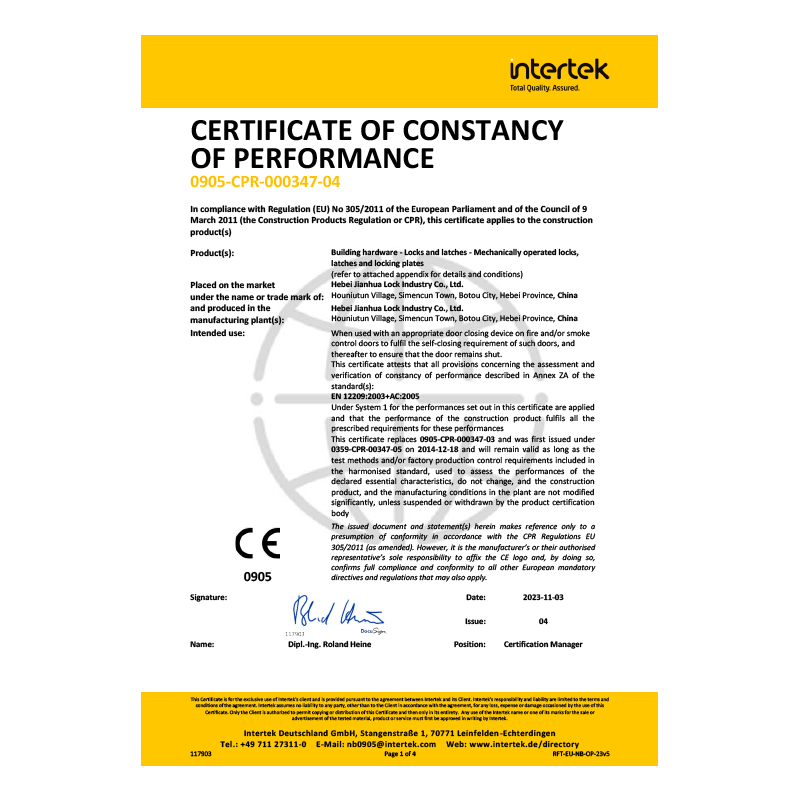
CE (Conformité Européenne) certification ensures compliance with EN 12209, Europe’s benchmark for mechanical strength, corrosion resistance, and endurance through 200,000+ operational cycles. Certified models undergo third-party testing for:
- Anti-drill protection (hardened steel plates)
- Pick resistance (6-pin cylinders with false gates)
- Fire safety compliance (30+ minute integrity rating)
A 2023 study found CE-certified locks reduced insurance claims for break-ins by 62% compared to non-certified alternatives.
Enhanced Security: Resistance to Forced Entry and Tampering
Built-In Anti-Break-In Features of CE Mortise Locks
CE mortise locks come with components designed to resist attacks and satisfy the security standards required in industrial settings. These locks feature steel reinforcements similar to what's used in military applications, while special anti-drill plates stop power tools from getting through at the most vulnerable spots. When it comes to the locking mechanism itself, the bolts actually extend around 20mm into the strike plates, which is three times deeper than what we typically see in regular locks. This creates a much stronger defense against someone trying to force entry with a crowbar, capable of withstanding over 1,200 Newton meters of twisting force before failing.
Protection Against Drilling, Picking, and Physical Attacks
Steel rods that are hardened sit around keyways and can really give carbide drill bits a run for their money, often lasting well beyond 14 minutes before giving way. Mushroom shaped driver pins create all sorts of problems for decoding tools and bump keys because they generate random binding sequences that just don't make sense to pickers. The rotating disk tumblers have another trick up their sleeve too they automatically reset themselves whenever someone tries to pick them, which means lock pickers need roughly three quarters more effort compared to regular cylindrical locks. And let's not forget about those anti snap features inside most modern locks. These mechanisms stop the cylinder from cracking apart when someone tries to force it open with a wrench attack, thanks to those reinforced steel parts working behind the scenes to keep everything intact.
Advanced Anti-Tamper and Reinforced Core Mechanisms in CE Models
Lock cylinders made from boron alloys can hold up against torch attacks lasting around 10 minutes even when temperatures reach 1200 degrees Celsius, and still keep all internal parts intact. These locks feature modular cores that make it possible to change keys in just about 90 seconds flat, no need to take apart doors or anything like that which is really important for managing access in commercial buildings. The patented system for controlling keys provides something like ten million different combinations available, plus restricted keyways stop people from making copies without permission. They maintain their top level ANSI/BHMA Grade AAA rating through well over half a million locking cycles too, so these locks are built to last in demanding environments where security matters most.
Multi-Point Locking: A Structural Advantage for Maximum Security
CE mortise locks achieve superior door security through multi-point locking systems that engage up to five strike points along the frame. This distributed load design transforms door protection from a single vulnerable contact into a reinforced barrier.
How Multiple Locking Points Improve Door Frame Engagement
Most traditional single point locks leave security concentrated in just one spot on the door. Statistics from break-in reports indicate around 8 out of 10 forced entries go after regular deadbolts first. That's where CE certified mortise locks make a real difference. These systems work differently because they engage both vertical bolts at the top and bottom parts of the door frame while also deploying horizontal bolts across the sides. According to what we've seen in field tests, doors equipped with these multi point locking systems show about half again as much resistance to warping during prolonged attempts at breaking in, when compared against standard cylindrical lock setups. The multiple points of contact simply distribute force better over time.
Engineering Principles Behind Multi-Point Systems in CE Mortise Locks
Three critical design elements enable this security:
- Load distribution – Locking force spreads across multiple steel-reinforced points
- Anti-retraction pins – Prevent bolt withdrawal during pry-bar attacks
- Interconnected mechanism – Single key operation synchronizes all bolts
Third-party testing by UL Solutions found CE mortise locks with multi-point systems withstand 4.3x longer attack times (average 4.1 minutes) before failure compared to cylindrical locks.
Performance Comparison: Mortise vs. Cylindrical Locks in Real-World Scenarios
| Metric | CE Mortise Lock | Cylindrical Lock |
|---|---|---|
| Forced entry attempts failed | 91% | 62% |
| Average drill resistance | 2.7 minutes | 48 seconds |
| Lifetime cycles (open/close) | 500,000+ | 100,000 |
Data source: UL 437 Security Testing Protocol (2023)
The structural integration of multi-point mechanisms makes CE mortise locks ideal for high-risk commercial environments like hospitals and banks, where concentrated force attacks are most prevalent.
Durability and Long-Term Reliability in High-Use Environments
CE-certified mortise locks are engineered to withstand demanding conditions while maintaining consistent performance. Their durability stems from strict material standards and robust construction principles mandated by CE certification protocols.
Robust Construction and Material Quality of CE-Certified Models
The locks are built tough with hardened steel parts, reinforced brass alloys, and special coatings that fight corrosion even when installed in places where people come and go all day long. According to testing data, the ones with CE certification can handle over 600,000 operations before showing any signs of wear down - that's roughly three times longer than what we see from regular non-certified versions on the market today. Manufacturers also treat important pieces such as bolts and strike plates with surface hardening processes so they don't bend or break when someone tries breaking in through force. This kind of attention to detail really makes a difference for security installations that need to last years rather than months.
Performance Under Heavy Usage: Commercial and Institutional Applications
Hospitals, schools, and office buildings often see doors opening and closing between 100 to over 200 times every single day. That's where CE mortise locks really shine in terms of dependability. According to research published in the 2024 Industrial Hardware Study, around 98 percent of these CE certified locks still worked perfectly after five years or more in those busy locations. Regular cylindrical locks only managed about 67% performance rate under similar conditions. Another big plus is their sealed design which keeps out dust and grime that typically gets inside and causes problems over time. This feature alone helps prevent many mechanical issues before they even start.
Lifecycle and Maintenance Advantages Over Standard Locks
CE certified models last longer between repairs, needing about 30 percent less maintenance work and saving around 42% on fixing costs after ten years of use. The way these locks are built means mechanics can swap out parts such as springs or door latches without taking apart the whole mechanism, which cuts down how long businesses have to wait while getting things fixed. Facilities looking at security solutions that pay off over time find these particularly appealing because they cut down on unexpected expenses and keep operations running smoothly month after month.
Functional Versatility Across Residential and Smart Building Applications
CE mortise locks exemplify the convergence of security and adaptability, offering solutions that align with modern architectural demands. Their design bridges traditional durability with contemporary smart-building needs, making them indispensable across diverse settings.
Adaptability to Various Door Types and Architectural Designs
These locks accommodate wood, metal, and composite doors, adapting to thicknesses ranging from 35mm to 60mm. Adjustable backset settings (60mm or 70mm) ensure compatibility with European and North American door standards, while modular components allow customization for unconventional entryways like arched or double doors.
Integration with Electronic Access Control and Smart Security Systems
CE mortise locks work really well with all sorts of modern tech stuff like RFID tags, fingerprint readers, and those fancy internet-connected devices we call IoT systems. According to a recent market study from Future Market Insights in 2023, nearly seven out of ten property managers are now looking for locks that can connect to smart systems so they can keep everything under control from one place. What makes these smart locks so appealing? Well, they let building staff manage who gets in through their phones, hand out temporary passes when needed, and get instant notifications if something looks suspicious. This kind of functionality just fits right into how security is handled today across commercial properties big and small.
Ideal Use Cases: From Offices to High-Security Residential Units
- Commercial: Office complexes benefit from audit trails and time-restricted access.
- Residential: High-end apartments use biometric integration for tenant safety.
- Mixed-Use: Hotels and hospitals leverage master-key systems without compromising per-room security.
This versatility positions CE mortise locks as a cornerstone of next-generation building design.
FAQ
-
What is a CE Mortise Lock?
A CE mortise lock is a type of door lock that is embedded within the door itself, providing enhanced security compared to standard cylindrical locks. -
How does a CE mortise lock differ from cylindrical locks?
Unlike cylindrical locks, CE mortise locks have complex mechanisms with multiple locking points, making them more secure and resistant to forced entry. -
Why is CE certification important for mortise locks?
CE certification ensures that a mortise lock meets European standards for mechanical strength, durability, and safety, which are crucial for reliable security. -
Can CE mortise locks be used with smart security systems?
Yes, CE mortise locks are compatible with smart security systems, making them suitable for modern residential and commercial applications.
Table of Contents
- What Is a CE Mortise Lock? Design, Mechanism, and Certification Standards
- Enhanced Security: Resistance to Forced Entry and Tampering
- Multi-Point Locking: A Structural Advantage for Maximum Security
- Durability and Long-Term Reliability in High-Use Environments
- Functional Versatility Across Residential and Smart Building Applications
- FAQ