
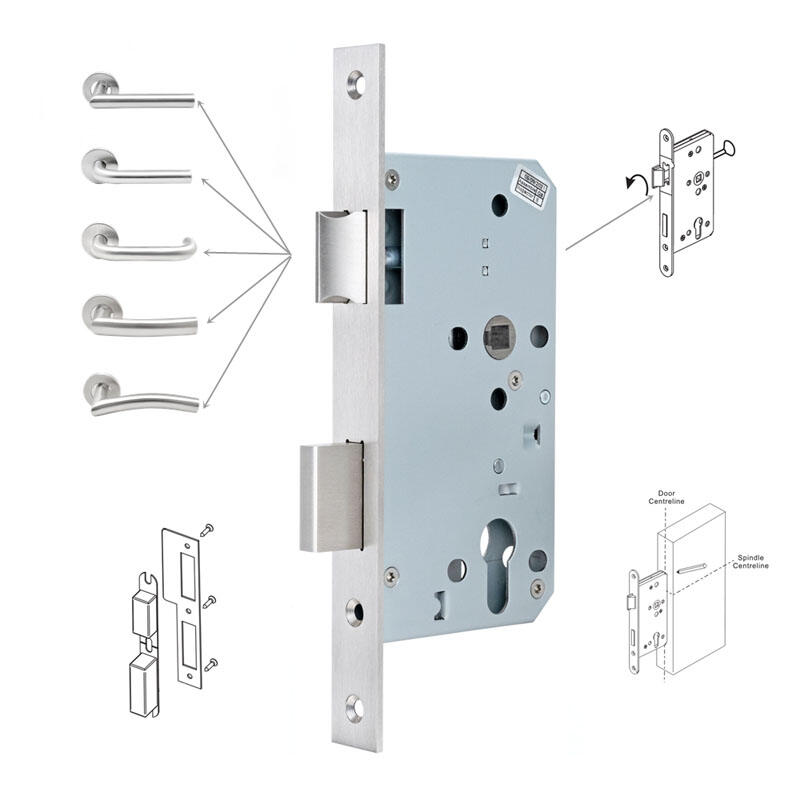
How CE Mortise Locks Reinforce Fire-Rated Door Integrity
Deep Embedding and Robust Metal Casing: Structural Stability Under Extreme Heat
CE (Conformité Européenne) mortise locks help keep fire-rated doors intact because they sit deep inside the door's cavity and come with strong steel casings. When installed properly, these locks go into the door core around 25 mm or deeper, so there's always fire-resistant material all around the mechanism itself. This setup gets rid of those spots where heat might sneak through during a fire emergency. The high quality steel used in these casings can handle temps over 800 degrees Celsius without bending out of shape something cheaper materials just cant do. Basically, that metal shell works like a heat shield protecting everything inside from getting too hot and keeping the latch working properly even when people need to evacuate. Tests have actually proven this works better too doors fitted with these deep embedded CE mortise locks stay structurally sound about 30 percent longer compared to regular surface mounted ones when put through similar fire conditions.
Installation Depth and Its Direct Impact on Door Core Continuity During Fire Exposure
Getting the installation depth right matters a lot when it comes to how well doors perform in fires. Locks need to be set into the door core at least 25mm deep to maintain the fire resistant properties throughout the whole assembly. If installed too shallow, we get what's called thermal bridges these are basically paths where heat slips through the insulation and speeds up how quickly the door fails. Proper embedding allows the wood or composite material around the lock to char evenly when exposed to fire, creating an insulating layer that slows down the temperature increase at the lock itself. Going deeper also stops those annoying air gaps that mess with smoke seals and break down the fire compartments. Tests have shown that doors installed according to these guidelines can still function after being exposed to flames for more than an hour, which makes them effective barriers against fire spread.
CE Mortise Lock Compliance with Global Fire Safety Standards
CE Marking as Proof of EN 1634-1 Fire Resistance Certification
The CE mark on mortise locks basically means they've met EN 1634-1 standards for fire resistance in door systems across Europe. Getting certified involves pretty strict testing by outside labs, where locks are subjected to those standard fire tests like ISO 834. The lock needs to hold up for at least 30 minutes, sometimes longer, without bending out of shape, losing its grip on the door, or letting flames or hot air escape through any cracks while the wood around it chars away. Regular checks happen too, so manufacturers keep producing quality products that actually work when fires break out. For anyone designing buildings or handling fire safety in the EU, seeing that CE mark gives them confidence these locks have been properly tested and will perform under pressure in real emergency situations.
UL 10C Equivalence and Practical Limitations for U.S. Code Acceptance
UL 10C serves as the American counterpart to EN 1634-1 when it comes to testing fire door assemblies along with their hardware components for things like how long they hold up, maintain structural integrity, and resist water from fire hoses during tests. Even though many CE marked mortise locks show similar results in lab conditions, most U.S. building regulations such as the IBC and NFPA 101 still insist on hardware that has been listed by UL for proper approval. The reason? UL 10C actually specifies particular testing methods, document requirements, and listing processes that aren't part of standard CE certifications. That means simply swapping in CE certified locks usually won't work unless there's an extra UL evaluation done or permission granted by local officials. Anyone working on installation or specification needs to check with local building authorities first before going ahead with just CE certified hardware in any U.S. project, especially since some Authority Having Jurisdiction (AHJ) offices will demand proof of UL listing for plans reviews or getting inspections signed off properly.
Life-Safety Priority: CE Mortise Locks and NFPA 101 Egress Requirements
Single-Cylinder Configurations Ensure Unobstructed Emergency Exit
The Life Safety Code, known as NFPA 101, requires buildings to allow people to get out quickly without needing any tools or special knowledge. That means no fumbling for keys or trying to figure out how to open doors during emergencies. CE mortise locks work well for this because they have what's called a single cylinder setup. Inside, there's a lever that releases the latch right away, but outside the door stays locked until someone uses a key. Double cylinder locks are different though they need a key from both sides, which actually goes against safety regulations. When fires happen or other crises strike, every second matters, so these standard locks ensure people can escape without delay. At the end of the day, building codes prioritize saving lives over keeping things secure when danger is present.
Building managers select single-cylinder CE mortise locks to ensure compliance in high-occupancy facilities such as schools, hospitals, and assembly spaces—where enforcement of egress requirements is most stringent. These configurations uphold both daily security and emergency readiness, eliminating legal liability tied to obstructed exits while maintaining full fire-resistance performance.
Smoke and Flame Containment: The Sealing Advantage of CE Mortise Locksets
Mortise locksets from CE feature special sealing systems designed to stop fire and smoke from getting through doors and their hardware gaps. These locks come with something called intumescent seals which are basically heat sensitive strips placed around the lock casing. When temps hit over 200 degrees Celsius, these seals expand quickly to fill any spaces between the door and its frame. Alongside these thermal seals, there are also perimeter smoke barriers made of materials like silicone or brushes that work against toxic fumes right at the start of a fire before those heat reactive seals kick in. Mortise locks sit recessed into the door, so they naturally create fewer air gaps around the actual lock body compared to surface mounted options that tend to leave little escape routes for smoke. Tests have shown that when installed correctly, fire rated mortise locksets cut down on smoke leakage by over 70% compared to regular ones. This combination of sealing methods meets important fire resistance standards like EN 1634-1, UL 10C, and NFPA 80. Meeting these specs helps buildings maintain proper fire compartments, slows down how fast fires spread, and gives people more time to get out safely.
Frequently Asked Questions
What are CE Mortise Locks?
CE Mortise Locks are a type of lock that meet the European standards for fire safety, specifically designed to reinforce fire-rated door integrity through deep embedding and robust metal casings.
How do CE Mortise Locks improve fire safety?
They improve fire safety by being installed deep inside the door's cavity, thereby removing heat paths, and using high-quality steel casings that can withstand temperatures over 800 degrees Celsius.
What standards must CE Mortise Locks meet?
CE Mortise Locks must meet EN 1634-1 standards, proving their fire resistance in door systems across Europe.
Can CE Mortise Locks be used in the United States?
While they show similar results to American standards in labs, CE Mortise Locks require additional UL evaluation or permission for acceptance in U.S. projects.