
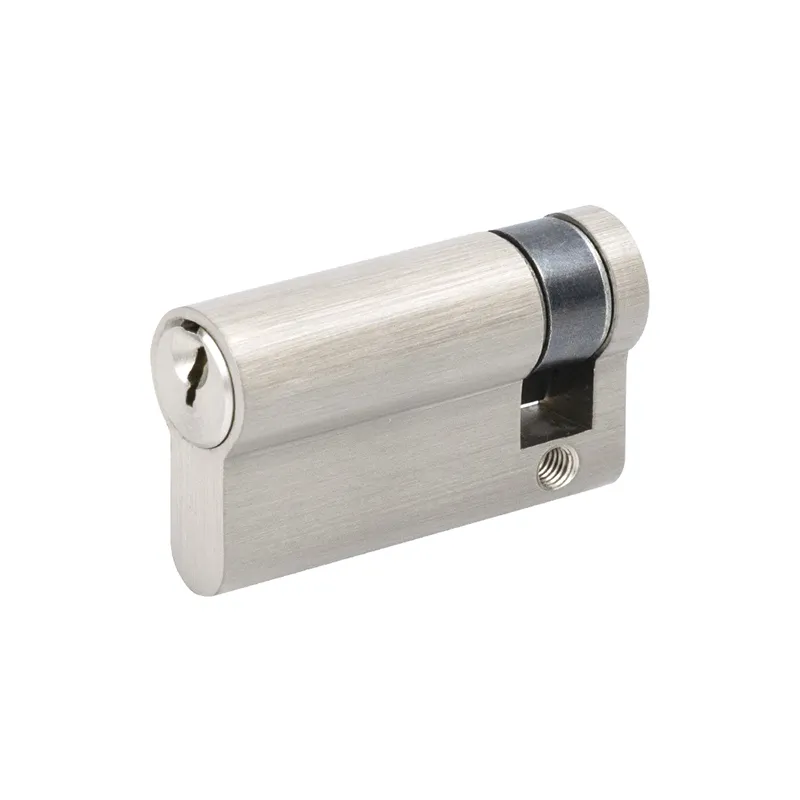
Tribological Advantages: Self-Lubrication and Wear Resistance in High-Traffic Doors
In heavy-duty commercial applications, such as hospitals, educational facilities, and industrial complexes, lock cylinders endure hundreds of operational cycles daily. Under these relentless mechanical stresses, material selection directly determines lock lifespan. Premium brass alloys (such as H59 or H62 leaded brass) offer distinct tribological benefits: a naturally low friction coefficient paired with self-lubricating surface behavior. Unlike zinc alloy or aluminum cylinders—which tend to gall, wear down pin chambers, or generate metal shavings over time—solid brass maintains smooth pin movement without requiring excessive wet lubricants that attract dust and debris. Field evaluations in high-traffic facilities consistently demonstrate that solid brass pin tumbler chambers retain key-bitting alignment over hundreds of thousands of cycles, preventing mechanical key jamming and latch failures.
Corrosion Defense: Superior Resilience in Coastal and High-Humidity Environments
Environmental degradation is a leading cause of premature lock cylinder failure. In seaside construction projects or high-humidity commercial buildings, atmospheric moisture and airborne salts cause rapid galvanic corrosion in inferior metals. Aluminum cylinders suffer from pitting corrosion, while zinc alloys oxidize into white powdery deposits that lock internal tumblers in place. Solid brass, a copper-zinc alloy, forms a stable, non-porous protective oxide layer when exposed to atmosphere and moisture. During neutral salt spray (NSS) testing protocols, high-purity brass cylinders withstand hundreds of hours without structural pitting or chamber oxidation. This metallurgical stability makes brass profile cylinders the industrypreferred baseline for heavy-duty exterior security doors and fire-rated emergency exit hardware.
| Material Property | Solid Brass (H59 / H62) | Zinc Die-Cast Alloy | Anodized Aluminum |
| Tensile Strength (MPa) | 390 – 450 | 200 – 280 | 150 – 220 |
| Machining Tolerance | Ultra-Precise (±0.008 mm) | Moderate (±0.03 mm) | Moderate (±0.02 mm) |
| Corrosion Resistance (NSS) | Excellent (Salt Spray 96 hrs) | Poor (Oxidizes to powder) | Fair (Prone to pitting) |
| EN 1303 Durability Grade | Grade 6 (100,000 cycles) | Grade 4 (25,000 cycles max) | Grade 4–5 (50,000 cycles max) |
| Anti-Drill / Anti-Pick Compatibility | High (Integrates hardened steel pins) | Low (Soft housing distorts) | Low (Weak thread holding) |
Machining Precision and Anti-Pick Security Mechanisms
Precision engineering is the cornerstone of high-security master keying systems. A heavy-duty profile cylinder requires exacting tolerances inside the plug and housing pin chambers to prevent unauthorized manipulation (picking, bumping, or impressioning). Brass exhibits outstanding machinability, allowing CNC multi-axis milling tools to maintain tight tolerances. This extreme dimensional precision enables complex pin configurations, anti-pick spool pins, and hardened steel anti-drill inserts to be pressed directly into the brass housing without risking hairline fractures. Soft or brittle metals cannot maintain these structural tolerances under forced entry attacks, making solid brass the preferred choice among security architects and master locksmiths.
Harmonizing Material Density with EN 1303 European Certification
Architectural hardware specified for public and commercial infrastructure must conform to rigorous regulatory benchmarks. In European construction markets, profile cylinders are evaluated against EN 1303—the definitive benchmark for cylinder locks. EN 1303 rates cylinders across key metrics including Category of Use, Durability, Fire Resistance, and Key Related Security. Achieving Grade 6 Durability (100,000 test cycles) and high fire containment ratings under EN 1634-1 requires a cylinder housing that maintains dimensional integrity when exposed to extreme mechanical load and elevated temperatures. Solid brass possesses a high melting point (~900°C–940°C), preventing the lock plug from collapsing during thermal exposure and maintaining operational readiness alongside fire-rated mortise lock bodies.
Lifecycle Cost Efficiency and Commercial Value for OEM/ODM Procurement
While raw brass carries a higher initial material cost than zinc die-cast or extruded aluminum alloys, its long-term commercial value far outweighs the initial investment. Replacing a failed cylinder in a commercial building involves not only component replacement costs but also expensive field technician service calls and potential security breaches. Facilities managers and door manufacturers recognize that solid brass profile cylinders deliver a significantly lower total cost of ownership (TCO). For international distributors and hardware brand owners, sourcing high-grade brass cylinders reduces warranty claims, enhances brand reputation, and simplifies compliance auditing across multi-regional commercial projects.
Engineering Quality for Global Markets: Manufacturing Strength by DIROCK
Delivering heavy-duty lock cylinders that satisfy international performance standards demands continuous engineering refinement and strict manufacturing discipline. DIROCK is a specialized global manufacturer of European-standard fire door hardware and high-security architectural cylinders based in China. Operating an ISO 9001:2015, ISO 14001, and ISO 45001 certified manufacturing plant equipped with automated CNC machining lines, DIROCK produces a complete range of CE-marked and EN 1303 compliant profile cylinders, mortise locks, lever handles, hinges, and panic exit hardware. By partnering with accredited third-party testing bodies like Intertek and Warringtonfire, DIROCK provides global B2B clients with tailored OEM/ODM hardware solutions, robust supply chain capabilities, and reliable security hardware designed to safeguard critical infrastructure worldwide.
Table of Contents
- Tribological Advantages: Self-Lubrication and Wear Resistance in High-Traffic Doors
- Corrosion Defense: Superior Resilience in Coastal and High-Humidity Environments
- Machining Precision and Anti-Pick Security Mechanisms
- Harmonizing Material Density with EN 1303 European Certification
- Lifecycle Cost Efficiency and Commercial Value for OEM/ODM Procurement
- Engineering Quality for Global Markets: Manufacturing Strength by DIROCK